





A child pornography or child sexual abuse material (CSAM) accusation in Miami can bring an immediate search of your home, seizure of phones and computers, arrest, loss of employment, public shame, and the risk of prison and sex-offender registration. An investigation may begin with an internet provider report, a cloud account, a peer-to-peer network, an undercover operation, or a device used by more than one person.
Don’t answer detailed questions, unlock a device, delete files, reset an account, contact anyone involved in the investigation, or try to explain the evidence without legal advice. What seems like a harmless explanation can be misunderstood or used to connect you to a device, account, or file.
A Miami child pornography and CSAM criminal defense lawyer can examine the search warrant, preserve favorable evidence, challenge unlawful searches, and work with qualified forensic professionals to determine how files arrived, who could access them, and whether the government can prove knowing possession, control, transmission, or production. Early defense work matters in both Florida and federal investigations.
Answered around the clock. Free and confidential. English or Spanish.
A child pornography or CSAM investigation can move quickly, but an accusation isn’t proof. The sooner the defense begins, the sooner your lawyer can protect your rights, preserve digital evidence, examine the warrant and forensic record, and help you avoid preventable mistakes.
For help from Albert Quirantes, Esq. Criminal DUI & Ticket Lawyers, call or text 305-644-1800 for a free strategy session.
Albert Quirantes has practiced criminal defense for more than 35 years, represented more than 8,000 clients, and handled numerous jury trials. The firm has received more than 1,400 five-star Google reviews and serves clients in English and Spanish.
Albert Quirantes, Esq. represents Child Pornography & Child Sexual Abuse Materials (CSAM) cases throughout Miami-Dade County, Broward County, and South Florida.
Call us now at (305) 644-1800 for a FREE STRATEGY SESSION
Represented since 1987
English and Spanish
CSAM means child sexual abuse material. Under Florida Statute Section 847.0015, Florida replaced the term child pornography with child sexual abuse material to emphasize that a child is the victim of the content. The change did not alter the legal definitions or elements of the offenses.
Yes. Knowing solicitation, possession, control, or intentional viewing under Florida Statute Section 827.071 is generally a second-degree felony. The State still must prove knowledge and legal responsibility for the charged material.
Yes. Florida Statute Section 827.071 permits a separate offense for each qualifying image, video, or other presentation and for each child depicted. File identity, duplicates, access, and the charging method must still be examined.
Yes. Federal jurisdiction may arise from internet communications, interstate activity, mail, devices, storage media, production, receipt, distribution, or other facts connecting the case to federal law. State and federal authorities may investigate together.
Florida law now uses the term child sexual abuse material, commonly shortened to CSAM, in place of child pornography. The statutory term is singular even when a case involves many files. Under Florida Statute Section 847.0015, the terminology changed without changing the underlying definitions or elements. This page uses both terms so readers can understand the law and recognize the familiar practice-area name.
Under Florida Statute Section 827.071, it is a felony to knowingly possess, control, or intentionally view CSAM. The statute also addresses possession with intent to promote, promotion of a sexual performance by a child, use of a child in a sexual performance, and aggravated use involving a child younger than 12.
The State must prove the charge that was actually filed. In a possession case, the defense may focus on knowledge, control, access, the source of the file, device ownership, account attribution, and whether another person could have downloaded or stored the material. In a transmission or production case, the government must prove the additional conduct and intent required by the applicable statute.
Florida’s definition can include an image of an actual minor and certain altered material that portrays an identifiable minor. Synthetic, altered, or AI-generated material requires careful analysis of the exact file, the identity evidence, and the statutory definition. The label used by an investigator doesn’t decide whether the file satisfies every element of the law.
A case may be investigated by local police, the Florida Department of Law Enforcement, the Department of Homeland Security, the FBI, the United States Postal Inspection Service, or a joint task force. The same investigation can raise both state and federal issues, but prosecutors don’t automatically file every available charge.
Florida transmission charges may be filed under Florida Statute Section 847.0137. Federal allegations may involve production under 18 U.S.C. Section 2251, transportation, distribution, receipt, or possession under 18 U.S.C. Section 2252 or 18 U.S.C. Section 2252A. Federal jurisdiction may depend on interstate communications, internet services, devices, storage media, or other facts connecting the case to federal law.
Knowing possession, control, or intentional viewing under Florida Statute Section 827.071 is generally a second-degree felony. The statute permits a separate charge for each image or motion picture and for each child depicted. Possession with intent to promote is also generally a second-degree felony, and three or more copies may be prima facie evidence of intent to promote.
A second-degree felony is ordinarily punishable by up to 15 years in prison under Florida Statute Section 775.082 and a fine of up to $10,000 under Florida Statute Section 775.083. Those are statutory maximums, not predictions. Florida sentencing points, the number and type of files, prior record, alleged distribution, the age of a depicted child, and other facts can affect the actual exposure.
Transmission under Florida Statute Section 847.0137 is generally a second-degree felony. For an adult defendant, the statute includes a five-year mandatory minimum, subject to a limited statutory exception that requires specific written findings. Production and promotion allegations can carry still greater penalties, including mandatory minimum terms in qualifying cases.
Federal cases can carry lengthy mandatory minimum sentences. A first federal production conviction under 18 U.S.C. Section 2251 ordinarily carries 15 to 30 years. Federal receipt and distribution charges commonly carry a five-year mandatory minimum, while federal possession charges may carry substantial prison exposure without the same minimum in an ordinary first-offense case. Prior convictions and other statutory facts can increase the range.
A qualifying conviction can also require sex-offender registration under Florida Statute Section 943.0435. Registration can affect residence, employment, travel, internet identifiers, and public disclosure. Probation may include computer monitoring, internet restrictions, treatment, contact restrictions, searches, and other conditions. Immigration, professional licensing, housing, education, and family-court consequences may also follow.
Our office handles a wide range of Child Pornography and CSAM cases in Miami-Dade, including:
1
The presence of a file doesn’t automatically prove that a person knowingly downloaded, possessed, controlled, viewed, or transmitted it. We examine file paths, timestamps, search terms, viewing history, application data, download settings, and user activity to test whether the required mental state can be proved.
2
A home network, phone, tablet, computer, cloud folder, or messaging account may be used by more than one person. We analyze passwords, login records, device identifiers, user profiles, location data, and access patterns to challenge assumptions based only on an IP address or account name.
3
Forensic reports can contain important distinctions between an opened file, a cached file, a thumbnail, deleted data, an automatically synchronized item, and a file intentionally saved in an accessible folder. We review the collection method, forensic image, hash values, software artifacts, chain of custody, and the examiner’s conclusions.
4
A warrant application must establish probable cause and describe the place and items to be searched with sufficient particularity. We examine the cyber tip, IP-address attribution, timing, informant information, warrant scope, device search, interview, and any request to unlock or identify accounts. Evidence or statements obtained unlawfully may be subject to suppression.
5
The government must prove that the material meets the statutory definition and that the person charged is legally responsible for each count. We examine whether the evidence portrays an actual or identifiable minor, whether altered material fits the law, whether files are duplicates, and whether the State has improperly multiplied charges.
6
Possession doesn’t automatically establish transmission, promotion, or production. Sharing settings, upload records, recipient evidence, creation data, communications, and knowledge of a program’s operation can determine whether the government can prove the more serious allegation.
1
Many cases begin before an arrest. Investigators may send a subpoena, conduct surveillance, execute a search warrant, seize devices, or ask questions at a home or workplace. Don’t consent to additional searches or give a detailed statement without legal advice.
2
If an arrest occurs, the court addresses probable cause, detention or bond, surrender of passports, internet and device restrictions, contact restrictions, and other release conditions. Federal detention rules differ from Florida bond procedures.
3
Florida prosecutors or the United States Attorney’s Office decide which charges to file after reviewing the reports and digital evidence. Early defense work can identify mistaken attribution, shared access, incomplete forensic assumptions, and legal problems before that decision is final.
4
The defense reviews warrants, affidavits, cyber tips, subscriber records, device images, forensic reports, communications, interviews, and chain-of-custody records. A qualified defense examiner may be needed to evaluate the digital evidence without altering it.
5
Depending on the facts, the defense may challenge the warrant, request suppression of evidence or statements, contest expert methods, limit unfairly prejudicial material, seek access to forensic data, or move to dismiss charges that aren’t legally supported.
6
The defense evaluates trial defenses, charge reductions, plea terms, sentencing rules, registration, probation conditions, immigration risks, and collateral consequences. You decide whether to accept any resolution after receiving a clear explanation of the evidence and consequences. If the case proceeds to trial, the government must prove every element beyond a reasonable doubt.
A child pornography or CSAM case requires criminal defense work that combines constitutional law, digital evidence, sentencing knowledge, and careful attention to the client’s life outside the courtroom. The defense must begin with the actual devices, accounts, reports, and charging statutes, not assumptions based on the accusation.
Albert Quirantes is a Miami criminal defense lawyer who has defended people accused of serious crimes for more than 35 years. He has represented more than 8,000 clients and handled numerous jury trials. Albert Quirantes, Esq. Criminal DUI & Ticket Lawyers has over 1,400 five-star Google reviews and serves clients in English and Spanish from its Miami office.
The attorney team includes Stephen Millan, a former Miami-Dade Circuit Court judge and former prosecutor; Arthur Spiegel, a former prosecutor and former public defender with more than 40 years of experience; Jorge E. Alonso, a bilingual attorney with more than 40 years of experience who was born in Havana; and Jonathan Ibañez, a criminal defense trial lawyer whose work includes legal technology and AI-based defenses. The team brings courtroom experience, prosecutorial insight, local knowledge, and modern evidence analysis to Florida and federal cases.
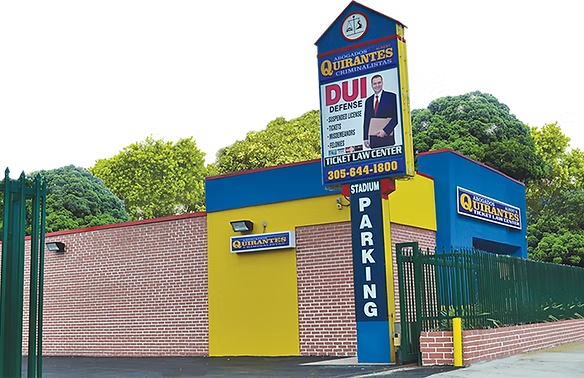
Albert Quirantes, Esq. Criminal DUI & Ticket Lawyers is located at 1815 NW 7th Street, Miami, FL 33125.
CSAM means child sexual abuse material. Florida adopted that term in place of child pornography. The terminology changed, but the government still must prove every element of the charged offense.
An accidental download may challenge knowledge or intent, but the full digital record matters. Investigators may examine whether the file was opened, moved, renamed, searched for, saved, shared, or repeatedly accessed.
An IP address usually identifies an internet connection, not necessarily the person who performed an act. Shared devices, guest access, household members, employees, passwords, user profiles, and login records can be important to attribution.
They can be evidence, but a deleted or recoverable artifact doesn’t answer every question. The defense may examine when the file was created or deleted, whether it was accessible, whether the user knew it existed, and whether software created the artifact automatically.
Florida Statute Section 827.071 allows separate charges for each image or motion picture and for each child depicted. The defense should still examine duplicates, file identity, legal sufficiency, possession dates, and whether the charging method is supported by the evidence and law.
Federal agencies and prosecutors may become involved when the evidence concerns interstate communications, internet services, mail, devices, storage media, production, distribution networks, or other federal jurisdictional facts. State and federal authorities may also work together.
The answer depends on the file and the statute. Florida law includes certain altered material portraying an identifiable minor. Federal law has its own definitions and constitutional limits. A careful review must determine whether the material depicts or appears to depict an actual or identifiable minor and whether it meets every element of the charged law.
Many Florida CSAM offenses are qualifying registration offenses. Federal and out-of-state convictions can also affect registration. The exact duties depend on the offense, disposition, sentence, residence, and other facts, so registration must be reviewed before any plea.
Eligibility depends on the charge, disposition, prior record, and statutory exclusions. A conviction or withheld adjudication for a registration offense creates serious barriers. Don’t rely on sealing or expungement without a case-specific review.
Yes. A plea or conviction can create severe immigration consequences depending on the statute, charging language, conduct, sentence, and immigration status. Criminal defense and immigration advice should be coordinated before any plea.
A child pornography or CSAM investigation can move quickly, but an accusation isn’t proof. The sooner the defense begins, the sooner your lawyer can protect your rights, preserve digital evidence, examine the warrant and forensic record, and help you avoid preventable mistakes.
For help from Albert Quirantes, Esq. Criminal DUI & Ticket Lawyers, call or text 305-644-1800 for a free strategy session.