








A DUI arrest can put your freedom, driver’s license, job, insurance, and reputation at risk. You may need to get to work tomorrow while also worrying about court, a breath test result, or something you said during the stop. You need a defense plan that addresses both the criminal accusation and your ability to drive legally.
Answered around the clock. Free and confidential. English or Spanish.
Your next step should give you a clear plan for the criminal case and your driving privileges. Do not let uncertainty or a missed deadline make the situation harder to address.
Call or text 305-644-1800 to schedule a free strategy session with Albert Quirantes, Esq. Criminal DUI & Ticket Lawyers. Let us review your situation, explain your options, and discuss retaining our Miami criminal defense team to protect your rights and prepare your defense.



Albert Quirantes, Esq. Criminal DUI & Ticket Lawyers defends people accused of DUI in Miami-Dade, including Miami, Miami Beach, Hialeah, Doral, Coral Gables, Homestead, and North Miami. Call or text 305-644-1800 for a free strategy session. Bring your citation, suspension notice, release paperwork, and any court notices so we can identify urgent steps.
Do not wait for your first court date to ask about your license. Preserve your paperwork and any videos or messages, follow release conditions, and arrange lawful transportation until your driving status is confirmed.
Represented since 1987
English and Spanish

Under Florida Statute 316.193, DUI involves driving or actual physical control of a vehicle with impaired normal faculties from alcohol or covered substances, or a blood- or breath-alcohol level of 0.08 or higher. A reading below 0.08 does not automatically defeat an impairment allegation. An engine that is off does not automatically defeat an actual-physical-control allegation.
We examine what the officer actually observed, what the recordings show, and how the State intends to prove its theory. Drinking, taking medication, an unusual driving maneuver, or appearing nervous should not replace a careful analysis of the evidence.
A drug DUI investigation requires close attention to the substance alleged, the testing method, the timing, and the claimed effect on driving. A prescription and a laboratory result answer different questions. We review whether the evidence connects the alleged substance to impairment at the relevant time, rather than treating a positive result as the entire case.
Tell your lawyer privately about medications, dosage, medical conditions, sleep, injuries, and the timing of food or alcohol. Do not alter medical records or invent an explanation. Accurate information helps counsel evaluate the prosecution’s assumptions.

For an ordinary first DUI conviction, Florida Statute 316.193 provides a $500–$1,000 fine and up to six months in jail. A first conviction involving a level of 0.15 or higher or a passenger under 18 carries a $1,000–$2,000 fine and up to nine months. Probation, DUI education, community service, vehicle restrictions, and other requirements may apply. Prior convictions and crashes can increase exposure, including felony charges.
These ranges are not predictions of your sentence. Your lawyer should explain the exact charge, prior-record issues, evidence, and available options before you decide how to resolve the case.
Under Florida Statute 322.28, a first DUI conviction not resulting in death carries a license revocation of at least 180 days and up to one year. Repeat convictions can produce much longer revocations. This court-related consequence is separate from the administrative suspension discussed below.
A DUI case can also create employment, professional licensing, commercial-driving, insurance, and travel concerns. If you are not a U.S. citizen, tell counsel before accepting a plea so the proposed disposition can receive appropriate immigration review.

Florida Statute 322.2615 allows a suspension review request within 10 days after issuance of the suspension notice. A first qualifying 0.08-or-higher suspension generally lasts six months; a first refusal suspension generally lasts one year. Prior suspensions can increase those periods.
We review the notice, driving record, temporary permit, hearing options, and eligibility for restricted driving. A review request alone does not pause the suspension. Do not assume your citation authorizes unrestricted driving or that dismissal of the criminal charge automatically clears the license case.
Choosing between challenging the suspension and pursuing an available restricted-license option requires an individual review. Contact our office promptly so we can explain the practical tradeoffs before a deadline passes.
Florida’s implied-consent requirements appear in Florida Statute 316.1932. Roadside exercises and chemical testing involve different rules. Refusal evidence can be used in a criminal proceeding; a refusal is not a guaranteed way to avoid a DUI prosecution.
Under current Florida Statute 316.1939, a qualifying first refusal of a lawful breath or urine test is a second-degree misdemeanor; a qualifying subsequent refusal is a first-degree misdemeanor. The State must prove the required circumstances, including the applicable warnings. Administrative and criminal proceedings remain separate.
We examine the precise request, lawful basis, warnings, recordings, prior history, and any medical or communication issue. Do not assume an officer’s use of the word “refusal” settles what happened.

Remain calm, avoid confrontation, and comply with lawful safety directions. Do not lie or provide false documents. Admissions about drinking, medication, or driving can become evidence, so avoid trying to argue your entire defense at the roadside.
You can assert your right to remain silent about potentially incriminating matters and ask for an attorney. Miranda protections concern custodial interrogation; they do not mean every roadside question requires warnings. The Sixth Amendment right to counsel generally attaches after formal criminal proceedings begin. Requesting counsel does not create an automatic right to delay a lawful chemical test, and test-refusal consequences require separate consideration.
However, remember that you can assert your right to remain silent about potentially incriminating matters and request an attorney before answering questions from a police officer or government agent, while still complying with lawful identification and document requirements; clearly exercising this valuable right and limiting voluntary statements can help you avoid providing incriminating evidence through your own words.
After release, save citations, notices, receipts, ride records, and relevant messages. Write a private timeline for your lawyer. Avoid public posts about the case and do not contact witnesses to influence their accounts.
1
We compare the officer’s stated reason for the stop with dispatch information, body-camera footage, dashboard video, and the sequence of events. A suppression motion may be appropriate when supported by the facts and law.
2
We examine instructions, footwear, lighting, road conditions, physical limitations, language comprehension, and the officer’s scoring. A written report should be tested against the complete recording and surrounding circumstances.
3
We review available instrument inspection records, operator qualifications, observation procedures, sample collection, chain of custody, laboratory methods, and timing. Where needed, qualified scientific assistance can help evaluate what a result proves and what it does not establish.
4
Who saw the vehicle move? Where was the accused seated? Who had access to the keys? What does the timeline show? These questions can matter when officers arrive after a crash or find someone in a parked vehicle.
5
We evaluate legally supported motions, potential reductions, and any available diversion options while preparing to challenge the evidence at trial. No reduction, program, dismissal, or particular result is automatic. You decide whether to accept a plea after counsel explains the consequences.

Under Florida Statute 322.2616, drivers under 21 face administrative suspension at 0.02 or higher. A first such violation generally means six months; a qualifying refusal generally means one year. Review must be requested within 10 days. This administrative rule is distinct from a criminal DUI charge.
Teenagers and other drivers under 21 can also face criminal DUI allegations when the evidence supports them. Being under 18 does not make the case harmless or guarantee a juvenile diversion outcome. Counsel must identify the actual charge, the proper court process, and the separate license issues.
Parents should bring all notices and discuss school, work, transportation, medical conditions, and family responsibilities with counsel. We help families understand each proceeding, preserve the young driver’s defense, and evaluate lawful options without assuming an adult-case resolution applies to a minor.
We can help you reinstate your driver’s license when eligible. That may involve reviewing your driving record, identifying outstanding requirements, addressing related tickets, and evaluating restricted-license options. A DUI suspension cannot always be removed merely by paying a citation or completing one course.
When legally supported, we can file motions to set aside ticket-related license suspensions and bench warrants arising from failures to appear. We can also request permission to appear for you and resolve eligible matters in your absence with prior court approval.
We can prepare appropriate affidavits, powers of attorney, and written authorities for representation, subject to court acceptance. Our goal is to reduce unnecessary court appearances whenever permitted. These documents do not override a judge’s order or excuse a required appearance without approval.

The criminal case can involve release conditions, arraignment, discovery, investigation, motions, negotiation, and trial. The administrative license matter follows a separate process and may require action before the criminal court meaningfully addresses the charge.
We explain the next required step, review recordings and testing records, and help you understand what decisions require your participation. A lawyer’s ability to waive or attend a particular hearing for you depends on the rules and the court’s approval.
Bring earlier DUI records, out-of-state driving history, commercial-license information, and any pending cases to your strategy session. An incomplete record can hide consequences that matter when negotiating a resolution.
You need a defense team that takes your freedom and ability to work seriously. Albert Quirantes has practiced criminal defense for more than 35 years, represented more than 8,000 clients, and handled numerous jury trials. The firm has more than 1,400 five-star Google reviews and serves clients in English and Spanish.
The team includes Stephen Millan, a former Miami-Dade Circuit Court judge and former prosecutor; Arthur Spiegel, a former prosecutor and former public defender; bilingual attorney Jorge E. Alonso; and criminal defense trial lawyer Jonathan Ibañez, whose work includes legal technology and AI-based defenses. We bring courtroom experience and careful evidence review to the decisions that shape your defense.
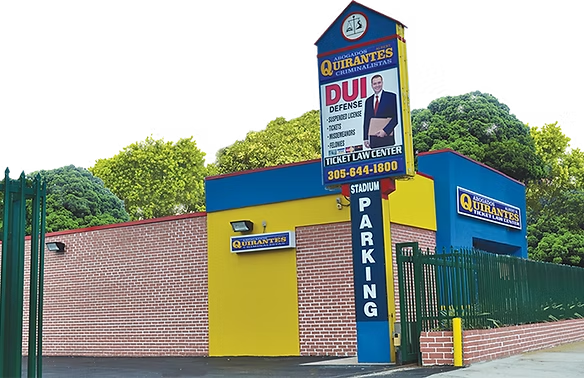
Albert Quirantes, Esq. Criminal DUI & Ticket Lawyers is located at 1815 NW 7th Street, Miami, FL 33125. We offer clear fees and payment plans for many budgets. A free strategy session is an opportunity to discuss your circumstances, urgent deadlines, and how retaining our firm can help you address the case.

Contact counsel promptly. License deadlines, access to recordings, and early defense decisions may arise before your first court appearance. Bring your suspension notice to the consultation.
No. Counsel should review how the test was obtained, the supporting records, the timing, and the rest of the evidence. A number does not replace an examination of the complete case.
Yes. Tell your lawyer privately what you took and when. The defense should examine the allegation, medical context, and whether the evidence supports impairment at the relevant time.
Do not assume either jail or a no-jail result. Counsel must review the charge, alleged aggravating facts, prior history, and available resolutions before assessing your exposure.
We can evaluate reinstatement and restricted-driving eligibility, identify requirements, and address related legal obstacles. We cannot guarantee approval, and you should not drive until legally authorized.
We can request permission when the rules allow it. Some proceedings require your attendance. Obtain confirmation from counsel before missing any scheduled appearance.
Bring citations, suspension and court notices, release documents, prior-case information, and relevant recordings or records. Tell us immediately about employment driving, a commercial license, or an approaching deadline.
Your next step should give you a clear plan for the criminal case and your driving privileges. Do not let uncertainty or a missed deadline make the situation harder to address.
Call or text 305-644-1800 to schedule a free strategy session with Albert Quirantes, Esq. Criminal DUI & Ticket Lawyers. Let us review your situation, explain your options, and discuss retaining our Miami criminal defense team to protect your rights and prepare your defense.