







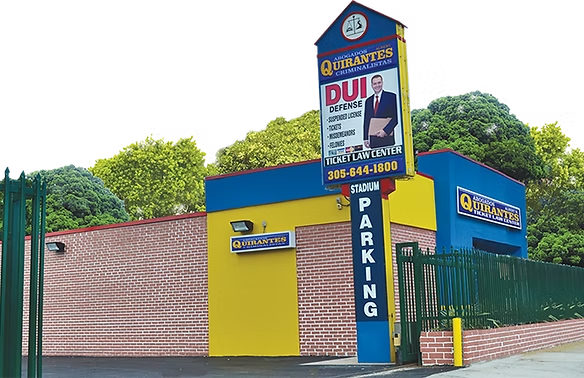

At Albert Quirantes, Esq. Criminal DUI & Ticket Lawyers, we assist clients in the sealing of records and expungement of charges from the record. We understand that you simply want to put the past behind you and start clean. We do everything in our power to ensure that you are provided that chance.

Sealings and expungements allow you the opportunity to clear previous charges and arrests from background checks.
This allows you a fair shake as you seek employment, housing and other opportunities. Without these legal tools, many individuals would find themselves unable to secure such necessities.
To achieve a sealing of your record of charges that you have faced in the past, you must first file the appropriate petition in court. If you have ever been convicted of anything, however, from petty theft to DUI, you are ineligible to have your record sealed. The process is only for charges that did not result in conviction.
We will guide you through the entire process from start to finish, thoroughly checking for small details that others might miss. We work to help you clear your criminal record.
With a skilled attorney handling the process, you can be assured that every detail is covered and your petition is filed correctly the first time.
With a skilled attorney overseeing the process, however, you can be assured that all angles of the matter have been addressed and that the case is comprehensively handled.
We provide free defense strategy session to each client to educate on how the process will proceed, and we are committed to keeping you fully informed on the progress of your case.
To arrange a free initial consultation, please call today at 305-644-1800.
An arrest can continue to appear in background searches even when the prosecutor never filed charges, dismissed the case, or you received a not-guilty verdict. That record may affect employment, housing, education, licensing, and the confidence to move forward.
Answered around the clock. Free and confidential. English or Spanish.
A careful eligibility review can prevent wasted time, a rejected FDLE application, or an inaccurate disclosure. If your Florida case was dismissed, not filed, acquitted, resolved with a withholding of adjudication, or handled in juvenile court, let us determine which form of relief may apply.
Call or text 305-644-1800 for a free strategy session with Albert Quirantes, Esq. Criminal DUI & Ticket Lawyers. Bring the arrest information, case number, disposition, and any prior record-relief documents so we can discuss how our firm can help.



Florida law offers several forms of record relief, but sealing and expunction are not interchangeable and are not available in every case. The result, charge, prior record, court supervision, and any earlier sealing or expunction can determine eligibility.
Albert Quirantes, Esq. Criminal DUI & Ticket Lawyers evaluates Florida criminal histories and handles the FDLE certificate and court-petition process. Call or text 305-644-1800 for a free strategy session about whether your record may qualify.
Represented since 1987
English and Spanish

Court-ordered sealing makes a qualifying criminal history record confidential and limits access, although specified agencies and officials can still obtain it. Florida Statute 943.059 governs court-ordered sealing.
Court-ordered expunction generally requires criminal justice agencies holding the record to destroy or obliterate it, subject to statutory exceptions. FDLE retains a confidential record that is available only as authorized by law or court order. Florida Statute 943.0585 governs court-ordered expunction.
Neither remedy rewrites history or guarantees that every private database, news report, social-media post, or previously obtained copy will disappear. The correct remedy depends on the case outcome and the entire record.
A case resolved with a qualifying withholding of adjudication may be eligible for sealing when the applicant satisfies the statutory requirements. Eligibility generally requires that the person:
Eligibility to request sealing does not guarantee relief. The court retains discretion to deny a petition even when FDLE issues a certificate of eligibility.

Direct expunction may be available when no charging document was filed, or when all qualifying charges were dismissed, nolle prossed, resolved by a judgment of acquittal, or ended in a not-guilty verdict. The applicant must also satisfy the prior-record, supervision, prior-relief, and offense restrictions in Florida Statute 943.0585.
In some cases involving a withholding of adjudication or a case that was not fully dismissed before trial, a record may first have to remain sealed for at least 10 years before an expunction petition can be considered. That waiting requirement does not apply to every dismissal or acquittal. We examine the exact disposition, plea history, and timing before selecting the procedure.
An expunction petition ordinarily concerns one arrest or one incident. Closely related additional arrests may sometimes be included if the statutory requirements are satisfied and the order states that intention.

An adjudication of guilt in the case generally prevents court-ordered sealing or expunction. A withholding of adjudication is not enough when the target record is a conviction, as specially defined by Florida Statute 943.0584, for an offense on the statute’s exclusion list.
The exclusion list includes numerous violent, sexual, child-related, domestic-violence, fraud, public-corruption, and serious property offenses. Examples include murder, aggravated battery, domestic battery, stalking, kidnapping, sexual offenses, child abuse, burglary of a dwelling, robbery, carjacking, home-invasion robbery, and specified fraud offenses. The complete statutory list and the actual charge and disposition must be reviewed.
A prior Florida adjudication of guilt, certain juvenile adjudications, an incomplete sentence, or earlier record relief may also prevent eligibility. Do not assume that a dismissed case, a withhold, or a first offense automatically qualifies.
Under Florida Statute 943.0595, FDLE automatically seals certain records when no charge was filed, all counts were dismissed, or all counts ended in acquittal or a not-guilty verdict, subject to statutory exclusions.
Automatic sealing is not limited to one qualifying event. However, it does not require every local criminal justice agency to seal its copy. A court-ordered seal can provide broader protection when the person qualifies. We check FDLE, clerk, and local-record status instead of assuming the automatic process reached every record.
1
We identify the arrest, court disposition, prior cases, juvenile history, earlier relief, and any pending supervision. A name-based docket search alone may not reveal every issue that affects eligibility.
2
The application usually requires a certified disposition. An application for expunction also requires the appropriate prosecutor’s certified statement concerning the qualifying disposition. Missing or inconsistent records can delay the process.
3
FDLE determines statutory eligibility to petition. The application includes required documents, fingerprints, and the statutory processing fee. The certificate is valid for 12 months. We process everything and go to court for you if you qualify for one flat legal fee.
4
After FDLE issues the certificate, we prepare the court petition, sworn statement, and proposed order. Knowingly making a false statement in the required affidavit can itself create criminal exposure.
5
The petition must be served on the appropriate prosecutor and arresting agency. They may respond. If the court sets a hearing, we present the legal basis for relief and address any objection.
5
If relief is granted, the clerk and agencies distribute and process certified copies as required by law. We monitor the case so that an order is not merely signed and left unprocessed.
Florida recognizes other forms of relief in specific circumstances. FDLE identifies administrative expunction for arrests made contrary to law or by mistake, lawful self-defense expunction, human-trafficking expunction, juvenile diversion expunction, early juvenile expunction, and automatic juvenile expunction. Each has separate requirements.
A person who may fit one of these categories should not use the ordinary court-ordered process without first determining which statute applies. We evaluate the arrest, disposition, age, program completion, and supporting certifications.

Juvenile records do not always disappear immediately when a child turns 18. Florida Statute 943.0515 establishes retention and automatic-expunction rules that depend on the juvenile’s history and classification.
A minor who successfully completes an authorized diversion program may qualify for diversion-program expunction under Florida Statute 943.0582. Certain forcible felonies and weapon-related felonies are excluded, and the required prosecutor certification and history conditions apply.
Some people between ages 18 and 21 may request early expunction of qualifying juvenile records if they satisfy the five-year offense-free and approval requirements. Juvenile diversion relief does not necessarily prevent a later qualifying court-ordered sealing or expunction. Early review can prevent mistaken assumptions from interfering with school, employment, military, or licensing plans.
Relief under Florida law does not erase federal, out-of-state, immigration, or private records that are outside the order’s reach. It does not automatically remove news stories, social-media content, or records lawfully obtained before the order.
The statutes permit a person to deny or fail to acknowledge a sealed or expunged arrest in many situations, but they create important exceptions. Disclosure may still be required or the record may remain available when applying to criminal justice agencies, The Florida Bar, specified schools, child-care or health-related positions, and other listed sensitive agencies or licenses, or when the person is a defendant in a later criminal prosecution.
We explain the effect of the particular order and the disclosure exceptions that may apply. A person should not answer an application question inaccurately based on a general statement found online.

Albert Quirantes has practiced criminal defense for more than 35 years, represented more than 8,000 clients, and handled numerous jury trials. The firm has over 1,400 five-star Google reviews and serves clients in English and Spanish.
The attorney team includes Stephen Millan, a former Miami-Dade Circuit Court judge and former prosecutor; Arthur Spiegel, a former prosecutor and public defender with more than 40 years of experience; Jorge E. Alonso, a bilingual attorney with more than 40 years of experience; and Jonathan Ibañez, a criminal defense trial lawyer whose work includes legal technology and AI-based defenses.
Albert Quirantes, Esq. Criminal DUI & Ticket Lawyers is located at 1815 NW 7th Street, Miami, FL 33125. We evaluate eligibility, obtain the necessary records, prepare the FDLE application and court filings, respond to objections, and follow the order through processing.

Ordinary court-ordered sealing and expunction generally do not remove an adjudication of guilt. A withholding of adjudication is not the same as an adjudication, but the target offense, prior history, and exclusion statute still determine eligibility.
No. Some qualifying dismissed cases may be automatically sealed, but automatic sealing and court-ordered expunction are different. A direct expunction still requires an FDLE certificate, petition, and court order.
Court-ordered relief generally concerns one arrest or incident, with a limited rule for directly related arrests specified in the order. Automatic sealing has a different rule and is not limited to one qualifying event.
Timing depends on obtaining certified records, prosecutor certification when required, FDLE review, the court’s calendar, objections, and agency processing. FDLE does not expedite ordinary application packets. Starting with a complete and consistent submission can reduce avoidable delay.
Not automatically. A court order directs the agencies covered by Florida law, but private companies, search engines, news organizations, and people who obtained information earlier may retain copies. Additional correction or removal requests may be needed, with no guaranteed result.
Many petitions are decided without a personal appearance, but a judge may require a hearing. With prior court approval, we can appear for a client or address appropriate matters in the client’s absence. Do not miss a scheduled hearing unless the court has excused you.
Yes. Sealing or expunction does not erase the underlying event for federal immigration purposes. Noncitizens should obtain coordinated criminal and immigration advice before filing and before answering any immigration form or interview question.
A careful eligibility review can prevent wasted time, a rejected FDLE application, or an inaccurate disclosure. If your Florida case was dismissed, not filed, acquitted, resolved with a withholding of adjudication, or handled in juvenile court, let us determine which form of relief may apply.
Call or text 305-644-1800 for a free strategy session with Albert Quirantes, Esq. Criminal DUI & Ticket Lawyers. Bring the arrest information, case number, disposition, and any prior record-relief documents so we can discuss how our firm can help.