







A possession with intent to sell or drug trafficking charge can expose you to years in prison, substantial fines, and consequences for your immigration status, employment, and family. A first arrest can still involve a mandatory prison sentence. The charge written on an arrest report is an accusation, and the evidence deserves a careful defense review.
Answered around the clock. Free and confidential. English or Spanish.
Do not wait until a plea offer or a missed deadline limits your choices. Let us review the evidence, explain your exposure, and discuss hiring our firm to defend you against possession with intent to sell or drug trafficking charges.
Call or text 305-644-1800 for a free strategy session with Albert Quirantes, Esq. Criminal DUI & Ticket Lawyers.


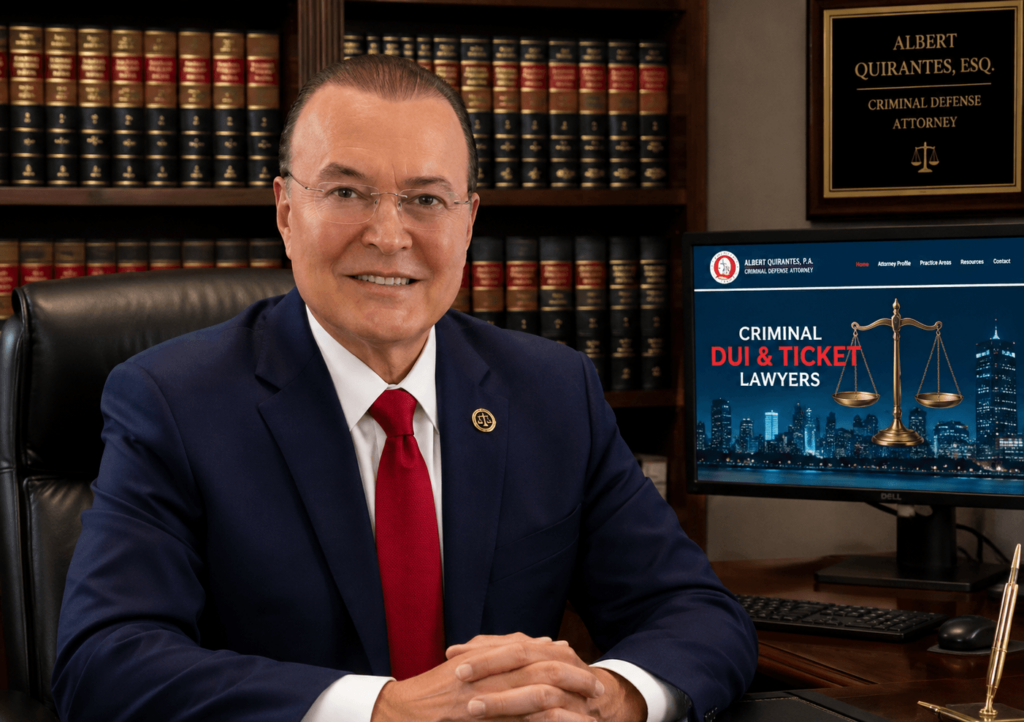
At Albert Quirantes, Esq. Criminal DUI & Ticket Lawyers, we defend people accused of drug offenses in Miami-Dade. We investigate how police found the substance, who controlled it, whether the alleged intent to sell is supported, and whether testing and weight measurements justify a trafficking charge. Call or text 305-644-1800 for a free strategy session to discuss your case and how we can represent you.
Do not explain ownership, deliveries, or other people’s involvement to investigators without legal advice. You can state that you wish to remain silent and request an attorney. Do not resist a lawful arrest, destroy evidence, delete messages, or contact witnesses to influence their accounts.
Represented since 1987
English and Spanish

Florida Statute 893.13 prohibits unauthorized possession of a controlled substance with intent to sell, manufacture, or deliver it. For possession with intent to sell, the prosecution must establish possession and the alleged intent to sell; it does not need a completed sale.
Investigators may point to packaging, quantities, scales, cash, communications, surveillance, or statements. We examine whether those facts support the accusation or have another explanation. Personal use does not automatically make possession lawful, but evidence inconsistent with selling can matter when challenging the more serious charge.
The offense level depends on the substance and statutory subsection. Many charges involving cocaine, heroin, or fentanyl fall within second-degree felony provisions; other substances can receive different classifications. Alleged activity in certain protected locations can elevate penalties. The substance, exact conduct, location, and charging document must be examined together.
Florida Statute 893.135 establishes trafficking offenses for specified drugs at specified quantities. A person can face trafficking based on knowing possession of a qualifying amount, even without a sale, profit, interstate travel, or a large distribution operation.
“Those drugs were for my own use” does not necessarily defeat trafficking. The defense must examine possession, knowledge, drug identification, the legally counted quantity, and the other elements. Charges involving sale, delivery, manufacture, purchase, or bringing drugs into Florida may also fall under the trafficking statute.
A substance on someone’s person presents different issues from a substance in a shared car, home, storage unit, or package. For constructive possession, the prosecution must establish the required knowledge and control. Being nearby, riding in a vehicle, or knowing the owner of a property does not automatically establish possession.
Knowledge that a substance is present and knowledge of its illicit nature are distinct legal questions. Florida Statute 893.101 makes lack of knowledge of the substance’s illicit nature an affirmative defense rather than requiring the State to prove illicit-nature knowledge as an element. We evaluate the correct defense and jury instructions for the facts.
The following examples summarize selected lower trafficking tiers under Florida Statute 893.135. They are not the complete penalty schedule. Larger quantities and other circumstances can produce longer mandatory terms, greater fines, or life imprisonment.
For several substances, the statute counts a qualifying mixture, not simply the pure drug. Pill composition, testing, packaging exclusions, and the proper weight calculation can be decisive. A small-looking amount may still meet a trafficking threshold; we do not assume the police calculation is correct.
These are mandatory minimum examples, not maximum sentences or predictions. Trafficking is generally a first-degree felony, ordinarily carrying a maximum of 30 years under Florida Statute 775.082, with longer punishment authorized for certain statutory circumstances. Other drug charges can carry different maximums and fines under Florida Statute 775.083.

A judge generally cannot disregard a trafficking mandatory minimum merely because the accused has no prior record or requests treatment. A legally supported suppression ruling, dismissal, acquittal, or negotiated change to the charge may affect the outcome. Each depends on the evidence and the applicable law.
The substantial-assistance provision in Florida Statute 893.135(4) permits the state attorney to seek a reduction or suspension of sentence in qualifying circumstances. Cooperation does not automatically guarantee that motion or a reduction. Do not agree to controlled purchases, interviews, or informant work without advice about the terms, personal risks, and legal consequences.
We assess the evidence, sentencing exposure, and lawful options before advising you about a plea or cooperation. Our objective is to protect your rights and pursue the strongest available defense, while giving you a realistic assessment of the case.
1
We examine the reason for a traffic stop, its duration, consent, search warrants, probable cause, canine activity, and searches of phones or homes. When the facts support it, we seek suppression of unlawfully obtained evidence. A search issue can affect both possession and trafficking charges.
2
We investigate access to the location, other occupants, ownership records, communications, fingerprints, and statements. We challenge assumptions that every occupant controlled the drugs or that packaging and cash necessarily prove selling. The State must prove the charged offense beyond a reasonable doubt.
3
We examine laboratory reports, sampling, chain of custody, identification of the substance, and how the quantity was calculated. We consider whether additional expert review or testing is warranted and whether the evidence supports the charged trafficking tier.
4
Informant incentives, incomplete recordings, disputed identification, inconsistent accounts, and the handling of alleged buy money can matter. Where supported, we evaluate entrapment and other defenses rather than assuming that an undercover accusation proves every element.
5
A trafficking conspiracy charge under Florida Statute 893.135(5) can carry the penalties applicable to the trafficking offense. We examine what agreement and participation the prosecution actually alleges. Association with an accused person does not by itself establish an agreement.
Federal prosecution involves separate statutes, procedures, and sentencing rules. If federal agents are involved, tell us immediately so the representation and defense strategy can address that exposure. A Florida trafficking threshold does not determine the federal charge or sentence.
A child accused of distributing drugs needs prompt defense representation. We examine the child’s role, the alleged substance and quantity, searches, statements, school circumstances, and whether other people pressured or exploited the child. We also assess detention, school consequences, and the possibility of prosecution in adult court under Chapter 985.
Florida’s juvenile treatment pathway is limited. Florida Statute 985.345 provides a potential pretrial substance-abuse intervention route for qualifying second- or third-degree felony purchase or possession charges and certain other listed offenses, including the requirement of no prior felony adjudication and the availability of a funded program. It does not make every juvenile distribution or trafficking case eligible.
If the state attorney proves dealing or selling by a preponderance of the evidence at the required preadmission hearing, the court must deny admission under that provision. A first-degree trafficking charge is outside that provision’s listed second- and third-degree purchase or possession categories. We examine whether the allegations and evidence support the filed charge and whether another lawful resolution is available.
Parents should seek advice before arranging an interview or encouraging a child to “explain everything.” A juvenile adjudication and an adult conviction have different legal consequences; neither should be treated casually. Call or text 305-644-1800 to discuss defense representation for your child.

A drug conviction can affect employment, professional licensing, housing, and education. Noncitizens may face serious immigration consequences; criminal defense and immigration counsel should review a proposed plea before it is accepted. Sealing or expungement eligibility depends on the precise charge, result, history, and statutory exclusions.
Certain adult drug convictions can also affect driving privileges under Florida Statute 322.055. We can help you evaluate reinstatement when eligible and address related traffic cases. Where legally available, we can seek to set aside ticket-related suspensions or failure-to-appear bench warrants and request court approval to resolve appropriate matters without your personal appearance. Court permission and the facts control; a felony drug case may require you to appear.
We begin by reviewing custody, release conditions, and the charging allegations. We then obtain discovery, preserve available recordings and communications, investigate possession and intent, and assess laboratory evidence and sentencing exposure. Depending on the case, the next steps can include motions, expert review, negotiations, or trial preparation.
Do not miss court or violate release conditions. Bring your arrest documents, case number, court notices, and any relevant prescriptions or records to your strategy session. Preserve evidence without altering it; ask us how to handle sensitive materials safely and lawfully.

You need a criminal defense team that will examine the accusation closely and explain the consequences before you make decisions. Albert Quirantes has practiced criminal defense for more than 35 years, represented more than 8,000 clients, and handled numerous jury trials. The firm has more than 1,400 five-star Google reviews and serves clients in English and Spanish.
The team includes Stephen Millan, a former Miami-Dade Circuit Court judge and former prosecutor; Arthur Spiegel, a former prosecutor and public defender; Jorge E. Alonso, a bilingual attorney; and Jonathan Ibañez, a criminal defense trial lawyer whose work includes legal technology. We bring that experience to reviewing evidence and preparing your defense. Prior experience and reviews do not determine the result of a particular case.
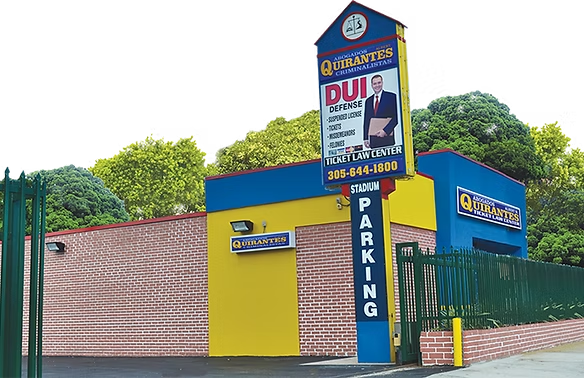
Albert Quirantes, Esq. Criminal DUI & Ticket Lawyers is located at 1815 NW 7th Street, Miami, FL 33125. We help people accused in Miami, Hialeah, Doral, Miami Beach, Coral Gables, Homestead, North Miami, and throughout Miami-Dade.

Yes. Knowing possession of a qualifying quantity can support trafficking. The State still must prove the required elements, including the legally counted amount.
Those facts may be evidence, but they do not automatically establish the charge. We examine context, lawful explanations, and the complete record.
Police may arrest more than one occupant, but the prosecution must establish each person’s criminal responsibility. Shared access and proximity require careful analysis.
Yes. A trafficking mandatory minimum can apply to a first offender. A clean record does not itself create an exception.
Lawful authorization can be important, but the prescription, patient, quantity, possession, and alleged conduct must be examined. Another person’s prescription does not automatically authorize your possession.
Get legal advice first. Cooperation can create additional risks and does not guarantee reduced charges or a shorter sentence.
Do not wait until a plea offer or a missed deadline limits your choices. Let us review the evidence, explain your exposure, and discuss hiring our firm to defend you against possession with intent to sell or drug trafficking charges.
Call or text 305-644-1800 for a free strategy session with Albert Quirantes, Esq. Criminal DUI & Ticket Lawyers.