








If police seized your money, vehicle, or other property, you may have to fight for its return while also defending a criminal accusation. Losing access to a work vehicle or savings can disrupt your family before any case reaches trial. A seizure does not mean the government has already won ownership of your property.
Answered around the clock. Free and confidential. English or Spanish.
If the government has seized your property, let us review the notice before you sign away rights or miss a deadline. We can explain the defense options and discuss hiring our team to represent you in the property matter and any related criminal case.
Call or text 305-644-1800 for a free strategy session with Albert Quirantes, Esq. Criminal DUI & Ticket Lawyers. Visit us at 1815 NW 7th Street, Miami, FL 33125. Bring your notices and ownership records so we can begin with the facts that matter.



At Albert Quirantes, Esq. Criminal DUI & Ticket Lawyers, we examine the seizure, identify the proceeding, and develop a defense focused on your property and any related criminal case. Call or text 305-644-1800 for a free strategy session. Bring every notice, envelope, property receipt, and court document so we can identify urgent deadlines.
We assist clients facing forfeiture issues arising in Miami, Miami Beach, Hialeah, Doral, Coral Gables, Homestead, and elsewhere in Miami-Dade. Whether the dispute involves seized cash, a car, or business assets, the first question is which agency and legal procedure control the case.
Represented since 1987
English and Spanish

Seizure is the government’s taking or restraint of property. Forfeiture is the legal process through which it seeks ownership because of an alleged connection to unlawful activity. Property held as evidence, impounded for a traffic issue, or subject to a lien may require a different remedy. We first determine why the government is holding it.
The Florida Contraband Forfeiture Act begins at Florida Statute 932.701. Its definitions cover specified contraband and qualifying property connected to criminal conduct. Florida Statute 932.702 addresses prohibited uses and acquisition with unlawful proceeds. The exact statutory basis matters; a vague suspicion is not a substitute for the required evidence.
Federal proceedings differ. The U.S. Department of Justice explanation of federal forfeiture distinguishes administrative, civil judicial, and criminal forfeiture. Criminal forfeiture follows a conviction and forms part of a sentence. Civil forfeiture can proceed without a criminal conviction. An administrative proceeding may result in forfeiture without a court case if no qualifying claim is filed.
Forfeiture disputes can involve vehicles, cash, bank funds, boats, real estate, or business property. The government may allege that an asset represents proceeds, facilitated an offense, or falls within a specific forfeiture category. Drug, fraud, gambling, and money-laundering investigations can raise these issues, but the forfeiture statute must actually reach the property.
Carrying cash is not itself a crime. A cash business, lawful savings, a recent sale, or money held for someone else may explain possession. We look for records that establish the actual source and ownership rather than relying on an unsupported explanation. We also distinguish recoverable lawful property from contraband that cannot lawfully be returned.

Under Florida Statute 932.703, seizure generally requires the owner’s arrest for a qualifying offense, but exceptions exist, including for monetary instruments. No arrest does not automatically invalidate a cash seizure.
For personal property, the statute provides a 15-day period after receipt of the notice to request an adversarial preliminary hearing. The written request must follow the prescribed certified-mail procedure. The agency also must apply for an initial court determination within 10 business days after seizure. These are different requirements, not interchangeable deadlines.
Bring the notice to us immediately. An initial hearing request does not replace an answer to a later complaint. Real property has different protections, and a court order or another statute can alter the procedural analysis.
Under Florida Statute 932.704, final forfeiture requires proof beyond a reasonable doubt that the property was used in violation of the act. The trial is ordinarily decided by a jury unless that right is waived. A probable-cause ruling at an early hearing does not decide the final case.

A federal notice should be reviewed separately from a Florida notice. The agency, type of property, notice date, and proceeding determine how to respond. Do not assume that every federal case has a 10-day deadline, or that calling an investigator protects your rights.
A claim contesting forfeiture and a petition asking the agency for remission or mitigation serve different purposes. Counsel must identify which filing preserves the right you intend to exercise. A third party claiming property in a federal criminal forfeiture also may need to use an ancillary proceeding rather than the defendant’s criminal defense filings.
We review the notice, confirm the proper forum and filing requirements, and coordinate the property claim with any related criminal representation. Deadlines can expire while an investigation remains open. Do not wait for the prosecutor’s charging decision to seek help.
1
We examine the traffic stop, warrant, consent, search scope, and seizure records. Body-camera video and dispatch records may reveal a different sequence from the written report. When supported by the governing law and facts, we challenge unlawfully obtained evidence and improper seizures.
2
Titles, purchase contracts, bank statements, tax records, loan documents, payroll records, and sale receipts can establish whose property it is and how it was acquired. We organize the records into a coherent account. Do not create backdated documents or change existing records.
3
We test the government’s account against dates, transactions, actual use, and witness evidence. Mere proximity to an accused person may leave important gaps. The defense must address the specific theory of proceeds or facilitation rather than simply assert that the owner is innocent.
4
An owner, spouse, lender, or other claimant may have rights distinct from those of the accused. Ownership, knowledge, reasonable inquiry, and when an interest arose can matter. We analyze the applicable protections and avoid assuming that a criminal defendant speaks for every person with an interest in the property.
5
We consider an excessive-fines challenge when punitive forfeiture is grossly disproportionate, as well as defects in service, notice, pleadings, and preservation of property. A valuable asset is not automatically immune from forfeiture. The constitutional analysis requires the actual offense, asset, and circumstances.
6
Depending on the evidence and procedural posture, we may seek release, contest the forfeiture at a hearing or trial, or negotiate a resolution. Any proposal should address ownership, costs, criminal-case consequences, and whether other agencies still claim the property. No lawyer can promise its return.
Statements in a civil claim or interview can affect a parallel criminal case. Explain the facts privately to your lawyer before submitting an account to an agency. Do not sign an abandonment, ownership disclaimer, settlement, or informant agreement without understanding its consequences.
You may decline investigative questions and ask to consult an attorney. Do not lie, obstruct, physically resist, or refuse identification information that the law requires. Miranda protections concern custodial interrogation; the Sixth Amendment right to counsel generally attaches after formal criminal proceedings begin. Asking for a lawyer does not guarantee an attorney’s immediate presence during every encounter or stop an otherwise lawful seizure.
When permissible and with prior court approval, we can seek to handle suitable matters without requiring your personal attendance. Written authorities or affidavits may be needed. Do not miss a hearing unless the court has excused you.

A teenager’s alleged conduct can create questions about a parent’s vehicle, family funds, or another person’s property. Juvenile proceedings under Florida Statute 985.35 are distinct from a civil forfeiture case. A juvenile disposition should not be treated automatically as an adult criminal conviction.
We review the child’s case and the property claim separately, including ownership, permission to use the asset, what a parent knew, and the applicable seizure requirements. A parent may need an independent claim. Ending the juvenile case does not by itself resolve every property dispute, and the child’s age does not automatically exempt an asset from forfeiture.
Bring titles, insurance records, purchase records, messages about permission, and every agency notice. Protect the child’s privacy and avoid public explanations that could undermine either defense.
Bring the seizure receipt, notice and envelope, agency contact information, case numbers, warrant or court papers, and documents showing ownership and lawful source. Tell us the date property was taken, when each notice arrived, who owns it, and whether anyone has already filed a claim or signed paperwork.
Keep originals and copies. Preserve relevant messages and videos. Do not delete records, move restrained assets, or contact witnesses to coordinate a story. Early review helps us choose the correct response before avoidable procedural mistakes occur.

Albert Quirantes has practiced criminal defense for more than 35 years, represented more than 8,000 clients, and handled numerous jury trials. Our firm has more than 1,400 five-star Google reviews and serves clients in English and Spanish. We approach a property dispute with attention to its effect on the client’s criminal defense, family, and livelihood.
Our team includes Stephen Millan, a former Miami-Dade Circuit Court judge and prosecutor; Arthur Spiegel, a former prosecutor and public defender; bilingual attorney Jorge E. Alonso; and criminal defense trial lawyer Jonathan Ibañez. We examine records, prepare legal challenges, and explain the available choices so you can make an informed decision about representation.
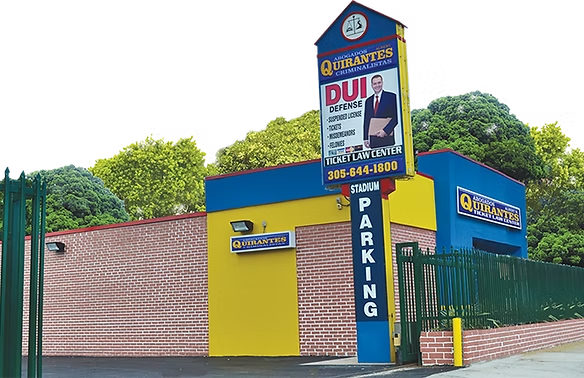
Albert Quirantes, Esq. Criminal DUI & Ticket Lawyers is located at 1815 NW 7th Street, Miami, FL 33125.

Civil forfeiture does not always require a criminal conviction. The government still must satisfy the governing law. We examine the seizure and claim rather than assume that no conviction automatically ends the dispute.
No. Ownership is important, but the alleged use, your knowledge, and applicable statutory protections must be evaluated. A loan, family relationship, or shared title can add issues that require a separate defense.
No. Forfeiture deadlines can run independently. Waiting may forfeit a chance to contest the government’s claim even while the criminal case remains unresolved.
Possibly, but dismissal does not automatically resolve every evidence hold or forfeiture proceeding. We identify the agency’s remaining legal basis and the procedure for seeking release.
No. We can review the facts, protect filing rights, and pursue supported defenses. The result depends on the law, evidence, ownership interests, and decisions by the agency or court.
If the government has seized your property, let us review the notice before you sign away rights or miss a deadline. We can explain the defense options and discuss hiring our team to represent you in the property matter and any related criminal case.
Call or text 305-644-1800 for a free strategy session with Albert Quirantes, Esq. Criminal DUI & Ticket Lawyers. Visit us at 1815 NW 7th Street, Miami, FL 33125. Bring your notices and ownership records so we can begin with the facts that matter.