








A firearm found during a traffic stop, a disputed threat, or a weapon discovered in a shared home can lead to an arrest before police understand the full story. The consequences may reach your freedom, employment, immigration status, and ability to possess firearms.
Answered around the clock. Free and confidential. English or Spanish.
Bring your arrest paperwork, release orders, prior dispositions, and any relevant video or ownership records. We can explain possible defenses and discuss retaining our firm to represent you.
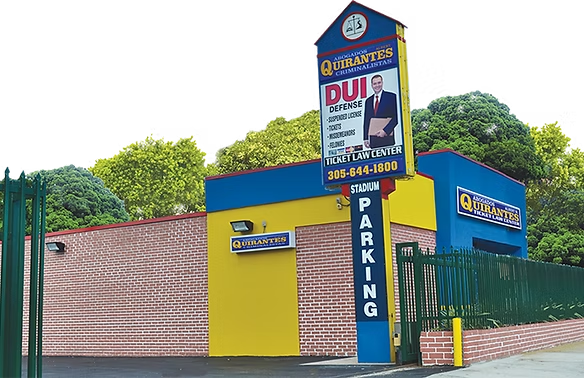
Call or text 305-644-1800 for a free strategy session with Albert Quirantes, Esq. Criminal DUI & Ticket Lawyers, at 1815 NW 7th Street, Miami, FL 33125.



Albert Quirantes, Esq. Criminal DUI & Ticket Lawyers represents people accused of firearm and other weapons offenses. Call or text 305-644-1800 for a free strategy session. We can review the accusation, explain the risks, and discuss hiring our team to defend you.
We serve clients in Miami, Miami Beach, Hialeah, Doral, Coral Gables, Homestead, and other Miami-Dade communities. Early defense work can preserve video, establish who controlled a vehicle or residence, and identify lawful possession or carry before assumptions become the prosecution’s case.
Represented since 1987
English and Spanish

Under Florida Statute 790.01, qualifying adults may carry concealed without a license. In a prosecution under its concealed-carry provisions, the State must prove both the absence of a license and ineligibility under the specified criteria. A missing permit alone does not establish that offense.
Open carry also requires attention to court decisions. The Attorney General’s September 2025 guidance following McDaniels v State addressed the ruling invalidating Florida’s general open-carry ban. It did not eliminate restrictions on prohibited persons, sensitive locations, or threatening conduct. Visible possession alone should not be treated as proof of a crime.
Restrictions concerning particular locations appear in Florida Statute 790.06. Vehicle possession and statutory exceptions also require review under Florida Statute 790.25. Eligibility, the precise location, how the firearm was carried, and the circumstances matter. This article is not blanket permission to carry anywhere.
1
We investigate eligibility, concealment, the type of object, and the statutory exceptions. An accusation involving a firearm may have a different degree from one involving another weapon. Police terminology does not replace proof of the charged elements.
2
Florida Statute 790.23 covers specified felony histories and certain juvenile findings, as well as firearms and ammunition. We examine the prior disposition, any restoration of firearm authority, and proof of knowing possession or control. Being near another person’s gun does not automatically resolve those questions.
3
Florida Statute 790.10 addresses improper exhibition in another person’s presence and includes a necessary-self-defense qualification. We review the complete encounter, witness viewpoints, video, and whether the accusation supports that misdemeanor or a separately charged offense such as aggravated assault.
4
We defend allegations involving armed burglary, robbery, drug offenses, unlawful discharge, and other weapon-related conduct. Each charge needs its own analysis. A claim that a firearm was present does not automatically establish its use, actual possession by a particular person, or every sentencing enhancement.
Florida weapons charges range from misdemeanors to felonies punishable by life imprisonment. The difference depends on the conduct, the type of weapon, eligibility to possess or carry it, prior history, and whether another offense occurred. An arrest label such as “brandishing” does not identify every element or the correct degree of the charge.
Improper exhibition or display: Under Florida Statute 790.10, exhibiting a firearm or specified weapon in another person’s presence in a rude, careless, angry, or threatening manner, outside necessary self-defense, is a first-degree misdemeanor. A gun being visible does not by itself establish improper exhibition. We examine the manner of display, who was present, the complete encounter, and whether defensive conduct was justified.
Unlawful concealed carry of a weapon other than a firearm: The concealed-weapon offense in Florida Statute 790.01(2) is a first-degree misdemeanor. The statute’s eligibility requirements and exceptions still matter; qualifying permitless carry is not automatically criminal. An unlawful concealed firearm charge falls under a different subsection and ordinarily is a felony.
Certain unlawful discharges: Florida Statute 790.15(1) and (4) provides first-degree misdemeanor charges for specified public-road or public-place discharges, reckless or negligent outdoor discharges on residential property, and certain recreational shooting in primarily residential areas with the specified density. Each provision has its own elements and exceptions, including lawful defense of life or property. More serious vehicle-discharge conduct can be a felony.
Using a firearm while impaired: Florida Statute 790.151 makes the specified use of a firearm while normal faculties are impaired by alcohol or covered substances a second-degree misdemeanor. “Use” includes discharge or having a firearm ready for immediate discharge; for this provision, the latter means loaded and in the person’s hand. The statute contains an exception for lawful self-defense or defense of property. Drinking alcohol while a firearm is elsewhere does not automatically prove this offense.
Unlawful concealed firearm carry under Florida Statute 790.01(3) ordinarily is a third-degree felony when the State proves the required lack of a license and ineligibility, along with the other elements. Concealment, permitless-carry eligibility, and statutory exceptions require careful review.
Aggravated assault under Florida Statute 784.021 ordinarily is a third-degree felony. A deadly-weapon assault requires proof of an assault, not simply an exposed firearm. An alleged intentional threat creating a well-founded fear of imminent violence can produce a felony accusation instead of, or alongside, improper exhibition. The facts and available self-defense evidence determine which theory is supportable.
Under Florida Statute 790.15(3), a driver or vehicle owner who knowingly directs another person to discharge a firearm from the vehicle commits a third-degree felony. Mere ownership or presence is not the same as proof of that direction.
Possession by a prohibited person under Florida Statute 790.23 ordinarily is a second-degree felony. The statute covers specified felony convictions and certain juvenile findings, with restrictions and exceptions that depend on the record. Firearms, ammunition, specified electric weapons, and concealed weapons must be analyzed under the particular provision charged.
Aggravated battery under Florida Statute 784.045, including battery involving a deadly weapon or the required serious injury, ordinarily is a second-degree felony. It differs from an assault allegation because the State must establish the applicable battery elements.
An occupant who knowingly and willfully fires from a vehicle within 1,000 feet of a person faces a second-degree felony under Florida Statute 790.15(2). Wanton or malicious shooting at, within, or into the buildings, occupied or used vehicles, vessels, or aircraft covered by Florida Statute 790.19 also can be a second-degree felony. Neither charge requires treating every accidental discharge as the same offense.
Under Florida Statute 790.23(4), the prohibited-possession offense becomes a first-degree felony punishable by up to life when the specified prior or current gang-related enhancement qualification applies. An ordinary prohibited-possession case does not automatically fall within that subsection.
Robbery with a firearm or other deadly weapon under Florida Statute 812.13(2)(a) is a first-degree felony punishable by up to life. Robbery with another weapon under subsection (2)(b) is a first-degree felony with an ordinarily applicable 30-year maximum. Armed burglary under Florida Statute 810.02(2) can be a first-degree felony punishable by up to life, including when the accused becomes armed during the burglary.
Florida Statute 775.087(1) also can reclassify a qualifying third-degree felony to second degree, second degree to first degree, or first degree to a life felony. This provision generally excludes felonies in which use of a weapon or firearm is already an essential element. Reclassification and mandatory minimum imprisonment are separate issues; neither should be assumed from the presence of a gun alone.
Under Florida Statute 775.082 and Florida Statute 775.083, ordinary maximum penalties include the following:
These are general ceilings, not predictions of a sentence. Mandatory minimums, reclassification, habitual-offender provisions, the Criminal Punishment Code, and other laws can alter imprisonment exposure. Statutory exceptions also can authorize higher fines. A plea may affect firearm rights, professional licensing, immigration, and future sentencing. Federal charges have separate elements and penalties. We evaluate the charging document, prior record, and evidence before discussing a resolution.
Florida’s 10–20–Life law is part of Florida Statute 775.087. It establishes mandatory prison terms for specified felony convictions or attempts involving a firearm or destructive device. It is not a separate charge that automatically applies to every weapons arrest, and the word “Life” does not mean every shooting produces an automatic life sentence.
The ordinary firearm provisions in subsection (2) list murder, sexual battery, robbery, burglary, arson, aggravated battery, kidnapping, escape, aircraft piracy, aggravated child abuse, aggravated abuse of an elderly person or disabled adult, specified destructive-device or bomb offenses, carjacking, home-invasion robbery, aggravated stalking, specified drug trafficking under section 893.135(1), firearm possession by a felon, and human trafficking. Attempts to commit listed felonies also can qualify.
The lists and requirements differ among possession, discharge, injury, and special firearm provisions. For example, felon possession has its own possession-tier rules and is excluded from the subsection (2) list governing the 20-year and 25-years-to-life discharge tiers. A separate qualifying felony may change that analysis. The State must prove the applicable offense and firearm facts.
Subsection (2)(a)1 ordinarily requires at least 10 years in prison when the accused actually possesses a firearm or destructive device during a listed felony or attempt. Discharge or injury is not required for this tier. Nevertheless, a gun merely discovered nearby does not automatically establish the personal possession required for the enhancement.
Under subsection (4), possession can be established by carrying the firearm on the person, or by proof beyond a reasonable doubt that it was within immediate physical reach, readily accessible, with intent to use it during the offense. Constructive possession sufficient for an underlying possession charge is not automatically sufficient for this mandatory minimum. Another participant’s gun does not automatically establish your personal firearm possession.
The possession tier specifies a three-year mandatory minimum for qualifying firearm possession by a felon and burglary of a conveyance, rather than the ordinary 10-year possession minimum. A conveyance can include a vehicle. These are exceptions within the possession tier, not blanket exceptions to every firearm sentencing provision.
For felon possession, the minimum becomes 10 years when the accused has the particular prior conviction or attempt listed in section 775.084(1)(b)1 and actually possessed a firearm or destructive device during that prior felony. A prior felony alone does not automatically satisfy this additional requirement. Ammunition-only possession should not be assumed to trigger a firearm-possession mandatory minimum.
Subsection (2)(a)2 requires at least 20 years when the accused discharges a firearm or destructive device during a felony or attempt included in that discharge provision. The State need not establish that someone was hit for this tier. A claimed warning shot can still create substantial exposure if it was an unlawful discharge during a qualifying crime; justified defensive force must be analyzed separately.
Under subsection (2)(a)3, discharge during a qualifying felony or attempt that causes death or great bodily harm to any person carries a mandatory minimum selected within a range from 25 years to life. The prosecution must establish the required causal connection and level of harm. The provision does not restrict the injured person to the intended target. The applicable underlying offense and other sentencing laws can affect the final sentence.
Subsection (3) provides a 15-year possession minimum for its listed felonies or attempts involving a machine gun, or a semiautomatic firearm together with its high-capacity detachable box magazine. For this provision, the magazine must be capable of holding more than 20 centerfire cartridges. The subsection has its own offense list, which includes certain controlled-substance sale, manufacture, delivery, and intent offenses. It also provides 20 years for qualifying discharge and 25 years to life when qualifying discharge causes death or great bodily harm. An ordinary semiautomatic firearm alone does not establish every element of this special provision.
Aggravated assault was removed from the 10–20–Life qualifying-offense lists effective July 1, 2016. As explained in Darling v. State, older offenses require analysis under the law applicable when they occurred. A current aggravated-assault charge alone does not trigger these minimums merely because a firearm was involved. Improper exhibition and unlawful concealed carry likewise are not automatically 10–20–Life cases. An additional listed felony, a different enhancement, or another sentencing statute may still create substantial exposure.
When the applicable mandatory minimum is legally established, a judge generally cannot substitute probation, withhold adjudication, or suspend or defer the required prison term. The statute bars statutory gain-time and discretionary early release before service of the minimum, subject to its limited exceptions, including executive clemency and conditional medical release. The minimum can exceed the ordinary maximum for the felony degree, and the court can impose a longer sentence when authorized. A first arrest or clean record does not by itself eliminate a mandatory minimum.
For offenses governed by the current statute, subsections (2)(d) and (3)(d) require consecutive mandatory minimum terms when there are multiple qualifying felony convictions requiring those minimums. Subsections (2)(e) and (3)(e) permit the specified firearm term to run consecutively to a term for an accompanying felony outside the applicable list. Consecutive terms run one after another rather than at the same time, so several counts can greatly increase total imprisonment.
Chapter 2025-81, section 4, effective July 1, 2025, changed these provisions. Decisions such as Billups v. State, applying Williams and Walton to older statutory language, addressed limits on consecutive mandatory minimums for possession without discharge during one criminal episode. Those older decisions should not be assumed to control unchanged under the amended statute. We examine the offense date, applicable statutory version, qualifying counts, separate episodes, and controlling case law before calculating aggregate exposure.
We examine whether the charged felony is listed, whether the object meets the statutory definition, who actually possessed or discharged it, whether the alleged injury resulted from that discharge, and whether the required enhancement facts are properly charged and established. We review unlawful searches, unreliable identification, witness accounts, video, forensic evidence, prior convictions, and available self-defense or Stand Your Ground immunity claims. Adult-court charges involving juveniles also require separate attention to transfer and sentencing rules.
Our goal is to achieve dismissal of charges, a charge reduction, or acquittal whenever possible. A supported change in the charge or firearm findings can materially change the mandatory minimum analysis. Before you accept a plea that could require years in prison, call or text Albert Quirantes, Esq. Criminal DUI & Ticket Lawyers at 305-644-1800 for a free strategy session. We can evaluate the evidence and discuss how our team can defend you.
Florida law can protect a person who uses or threatens lawful defensive force. Self-defense explains why the conduct was justified; Stand Your Ground addresses when retreat is not required; immunity can prevent prosecution of qualifying conduct before trial. These protections may matter in accusations of assault, battery, aggravated assault, a shooting, or another use of force. They are not limited to cases involving guns.
Under Florida Statute 776.012, nondeadly force or its threat may be justified when reasonably necessary against imminent unlawful force toward you or another person. Deadly force or its threat requires a reasonable belief that it is necessary to prevent imminent death, great bodily harm, or a forcible felony. The statute does not authorize retaliation after danger ends.
The legal question is what was reasonably necessary at the time, considering the complete encounter. We examine weapons, threats, distance, injuries, physical differences, and the sequence of events. Anger or a past threat alone does not establish an imminent danger justifying deadly force.
Section 776.012 provides no duty to retreat before justified nondeadly force. Its no-retreat protection for deadly force requires that you are not engaged in criminal activity and are somewhere you have a right to be. Stand Your Ground does not remove the requirement of reasonable necessity or authorize punishment of another person.
Florida Statute 776.013 addresses lawful home protection and a presumption of reasonable fear during specified unlawful, forcible entries or removals from a dwelling, residence, or occupied vehicle. Knowledge of the intrusion matters. Exceptions include certain lawful occupants, lawful custody situations, criminal activity, and identified officers performing official duties. The presumption must be assessed against those facts.
Florida Statute 776.031 permits qualifying nondeadly force to protect property. Deadly force to protect property requires reasonable necessity to prevent an imminent forcible felony. Ordinary loss of an item alone is not blanket justification for shooting. Florida Statute 776.08 defines forcible felonies, including robbery, burglary, and aggravated battery.
Florida Statute 776.041 limits justification for someone committing, attempting, or escaping a forcible felony or initially provoking force. The provocation provision has exceptions involving specified extreme danger and exhausted reasonable escape options, or good-faith withdrawal clearly communicated followed by continued aggression. We investigate rather than assume who started the encounter. Justified force does not automatically erase a separate unlawful-possession charge.
Florida Statute 776.032 protects qualifying justified force or threatened force from criminal prosecution and specified civil actions. Its criminal protection includes arrest, custody, charging, and prosecution. Police may still investigate; arrest for the force requires probable cause that it was unlawful. The statute also contains a law-enforcement exception.
We can seek a pretrial immunity hearing when supported by the facts and law. Once the defense raises a prima facie claim there, the party seeking to overcome immunity must do so by clear and convincing evidence. This is not an automatic dismissal upon claiming fear. We prepare witnesses and exhibits so the judge can evaluate the actual encounter. A successful immunity claim can end prosecution of the covered conduct before trial.
An unsuccessful immunity request does not itself eliminate a supported self-defense claim at trial. The hearing and trial have different procedures and burdens. We request appropriate jury instructions and challenge the State’s proof. Civil immunity has its own application; the statute provides specified fees and expenses when its conditions are met in a civil action, not automatic reimbursement of criminal-defense fees.
We preserve surveillance and body-camera footage, 911 recordings, messages, photographs, medical records, and witness accounts. We analyze each use of force separately, including whether the threat continued. We explain the benefits and risks of an immunity hearing, prepare for testimony and cross-examination, and continue trial preparation when necessary. Call or text 305-644-1800 for a free strategy session to discuss retaining our team for your Miami self-defense or Stand Your Ground case.
1
We review the basis for the traffic stop, detention, frisk, vehicle search, home entry, consent, and warrants. Body-camera recordings can reveal facts missing from a report. When the law and evidence support it, we seek suppression of unlawfully obtained evidence or statements.
2
A firearm in a shared car, bag, apartment, or workplace requires examination of knowledge and control. We review access, ownership records, fingerprints, DNA, statements, and where the item was found. Ownership and criminal possession are not always the same question.
3
We compare witness descriptions with footage and physical evidence. We examine whether the object fits the legal definition relevant to the charge and whether a report confuses a firearm, replica, or another object. Missing forensic evidence does not automatically defeat a case, but its significance should be assessed.
4
When justified force or threatened force is at issue, we examine the threat, sequence of events, and applicable limits. Florida Statute 776.032 provides an immunity procedure for qualifying conduct. A self-defense claim does not automatically excuse a separate prohibited-possession offense.
5
We test whether the State can establish the findings needed for enhanced punishment. We consider supported motions, negotiation, and trial after explaining the evidence and consequences. Our goal is to achieve dismissal of charges, a charge reduction, or acquittal whenever possible.

Keep your hands visible and follow lawful safety directions. Do not reach toward a firearm or physically resist. You can decline investigative questions and request an attorney before answering. Do not lie or obstruct, and comply with legal identification and document requirements that apply.
Miranda protections concern custodial interrogation. The Sixth Amendment right to counsel generally attaches after formal proceedings begin. Asking for counsel does not guarantee a lawyer’s immediate presence at every encounter. Preserve video and messages; do not delete evidence or contact witnesses in violation of a court order.
After an arrest, we review release conditions, obtain discovery, investigate the evidence, and prepare appropriate motions. Where permissible and with prior court approval, we can seek to handle suitable matters without your personal attendance and prepare written authorities or affidavits when needed. Do not miss court unless excused.
Minors face distinct rules. Florida Statute 790.22 restricts firearm possession under age 18, with specified exceptions including an unloaded firearm at home and qualifying hunting, shooting, and transportation. A first violation is a first-degree misdemeanor; repeat violations can be felonies. Detention, service requirements, and driving privileges may be affected.
Certain felony delinquency findings can create firearm restrictions extending beyond age 18 under Florida Statute 790.23. Adult prosecution must also be considered under Florida Statute 985.557. Gun charges seldom qualify for diversion. Eligibility still depends on the exact charge, the juvenile’s record, and the applicable program rules.
We review age, the exact charge, lawful exceptions, school consequences, detention, and the risk of adult prosecution. Parents should preserve relevant records and seek counsel before a child’s investigative interview. Do not assume juvenile confidentiality means the record will disappear.

Albert Quirantes has practiced criminal defense for more than 35 years, represented more than 8,000 clients, and handled numerous jury trials. Our firm has over 1,400 five-star Google reviews and serves clients in English and Spanish.
Our team includes Stephen Millan, former Miami-Dade Circuit Court judge and prosecutor; Arthur Spiegel, former prosecutor and public defender; bilingual attorney Jorge E. Alonso; and criminal defense trial lawyer Jonathan Ibañez. We bring courtroom experience and careful evidence analysis to firearm and weapons defense.
Albert Quirantes, Esq. Criminal DUI & Ticket Lawyers is located at 1815 NW 7th Street, Miami, FL 33125. Your free strategy session gives us an opportunity to discuss the accusation, immediate priorities, and the representation you need.

No. Under Florida law, qualifying adults can carry concealed without a license. Eligibility, location, possession restrictions, and the alleged conduct still matter.
Yes, ownership does not settle possession. The prosecution must prove the elements of the charged offense. We examine knowledge, control, and who had access.
No. Mandatory terms depend on the exact offense and statutory findings. Never assume the 10-20-Life label describes your actual exposure.
Return depends on the case, your eligibility, court orders, and applicable property procedures. Do not retrieve or possess a firearm in violation of an order or legal restriction.
Bring your arrest paperwork, release orders, prior dispositions, and any relevant video or ownership records. We can explain possible defenses and discuss retaining our firm to represent you.
Call or text 305-644-1800 for a free strategy session with Albert Quirantes, Esq. Criminal DUI & Ticket Lawyers, at 1815 NW 7th Street, Miami, FL 33125.