





ARRESTED? INVESTIGATED?
ARRESTADO? INVESTIGADO?
Probation can feel like the end of a case. It is not. Until the last day of supervision, the judge keeps the power to impose the sentence you avoided. If probation is revoked, the court can impose any sentence it could have imposed on the original charge. On a third-degree felony, that can mean up to five years in state prison, even when the violation was a missed appointment or a positive test.
A probation violation puts the original sentence back on the table. Bring your probation order, violation affidavit, warrant, payment history, officer communications, treatment and testing records, approvals, receipts, medical documents, and all paperwork from any new arrest to a free strategy session.
Contact Albert Quirantes, Esq. Criminal DUI & Ticket Lawyers today. Text or Call: 305-644-1800. Because every case is different, legal fees are quoted by the attorney only after a thorough analysis of the facts, evidence, charges, and expected work.

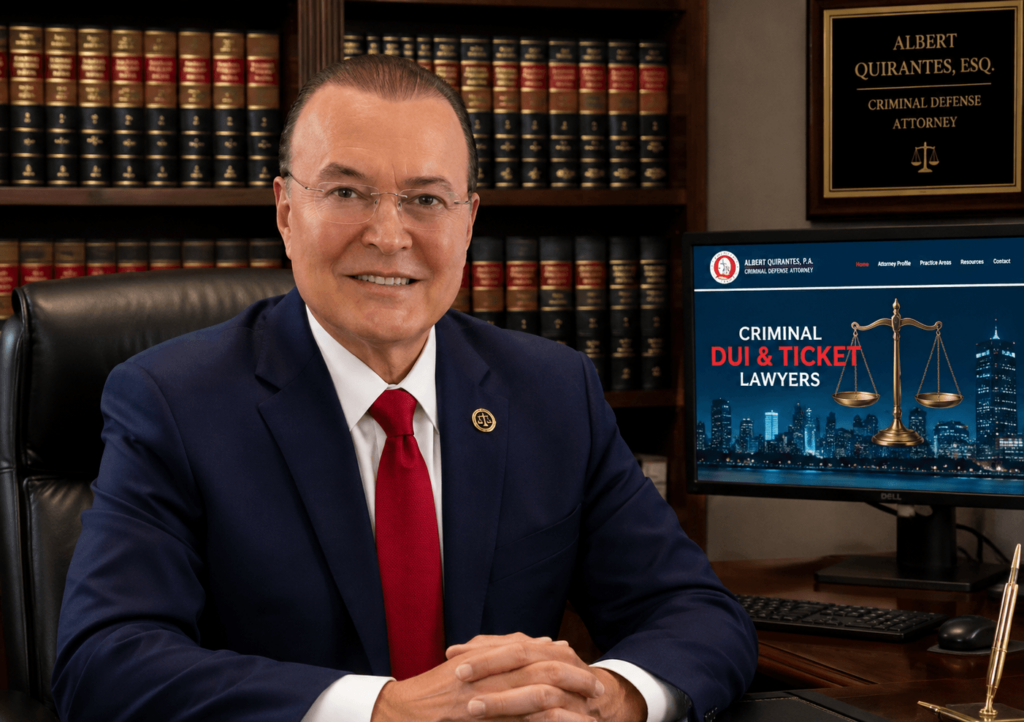
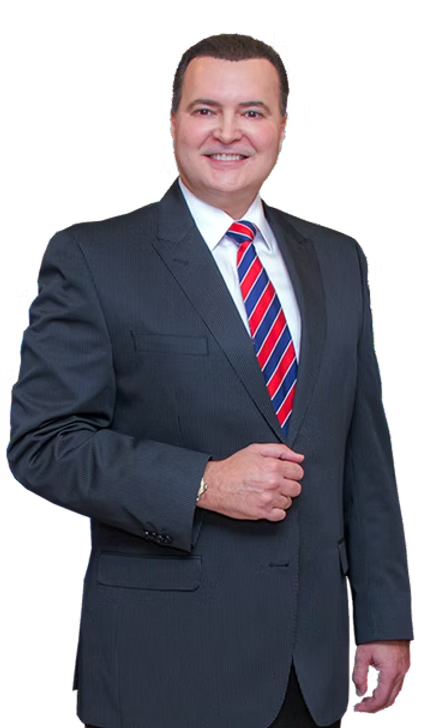
Albert Quirantes has practiced criminal defence for probation violations for more than 35 years, represented more than 8,000 clients, and handled numerous jury trials. His firm has over 1,400 five-star Google reviews and serves clients in English and Spanish.
Albert Quirantes, Esq. represents Probation Violation Defense cases throughout Miami-Dade County, Broward County, and South Florida.
Call us now at (305) 644-1800 for a FREE STRATEGY SESSION
Represented since 1987
English and Spanish
If you are looking for a Miami probation violation lawyer, the time to act is before you talk to your probation officer about the allegation and before a warrant is served. At Albert Quirantes, Esq. Criminal DUI & Ticket Lawyers, we concentrate our practice in criminal defense. We defend probation and community control violations in Miami-Dade and throughout South Florida. We identify the exact condition alleged, test whether the conduct was willful and substantial, challenge weak proof, present mitigation, and pursue dismissal, reinstatement, modification, or another result that keeps you out of jail.
Do not ignore a probation officer, a notice to appear, or a warrant. Do not explain the allegation in a text, a voicemail, a recorded jail call, or a hurried conversation. Save your probation order, reporting instructions, receipts, treatment and medical records, messages, calendars, travel approvals, and employment records.
Free strategy session Text or Call: 305-644-1800.
Text or Call: 305-644-1800 for a free strategy session with an attorney. Legal fees are quoted by the attorney only after a thorough analysis of the facts, evidence, charges, and expected work, because every case is different.

Under Florida Statute 948.001, probation is supervision in the community that requires contact with probation officers and compliance with the conditions the court imposes. Community control is a stricter form of supervised custody in the community, with restrictions that can confine a person to a residence, an approved location, or an approved schedule.
Florida Statute 948.03 lists the standard conditions. They include reporting to the probation officer as directed, permitting home visits, working at suitable employment, remaining within a specified place, living without violating any law, paying restitution, submitting to random drug or alcohol testing, and not possessing firearms. The judge can add special conditions, such as treatment, classes, community service, or a stay-away order.
The written sentencing order, the probation order, and any later modifications control. We compare the alleged violation with the condition actually imposed, the date it took effect, the instructions actually given, and whether compliance was realistically possible.
Florida Statute 948.06 defines a technical violation as an alleged violation that is not a new felony, misdemeanor, or criminal traffic offense. Common technical allegations include failure to report, a positive test, missed treatment, curfew violations, leaving the county without permission, failing to report a change of address or employment, incomplete community service, and missed payments.
A new-law violation alleges that you committed another crime while on supervision. A conviction is not required. Section 948.03 states that a conviction in a court of law is not necessary for a violation of law to constitute a violation of probation. An arrest for drug possession, DUI, or domestic violence can therefore lead to a violation hearing before the new case is resolved.

The category matters. It can affect arrest procedures, bond, eligibility for alternative sanctions, mandatory continuation rules, and sentencing exposure. We check whether the affidavit classifies the conduct correctly and whether the State can prove it with reliable evidence.
When there are reasonable grounds to believe you violated supervision in a material respect, Florida Statute 948.06 allows an officer to arrest you without a warrant and allows the sentencing judge to issue a warrant based on an affidavit. In some cases, the court may issue a notice to appear instead of a warrant.
Once the affidavit is filed and a warrant, arrest, or notice to appear follows, the probation period is tolled until the court rules. That means the court keeps jurisdiction even if your original end date passes while the violation is pending. If the affidavit is dismissed, you receive credit for the tolled time.
A person arrested on a probation violation may be held until brought before a judge. The court may release you with or without bail, but bond is not automatic. The judge may consider the allegation, the likely sanction, your criminal history, your supervision record, community ties, employment, health, and public safety.
The law denies bond while the violation is pending to a violent felony offender of special concern and to certain people arrested for a qualifying offense while on felony supervision. In every other case, preparation makes a difference: proof of residence, employment, treatment, family responsibilities, medical needs, and a practical release plan.
If you do not admit the violation and the court does not dismiss it, the court must give you the opportunity to be fully heard, in person or through your lawyer. A judge decides the case, not a jury. The State must prove a willful and substantial violation by the greater weight of the evidence, a lower standard than proof beyond a reasonable doubt.
Hearsay may be admitted at a violation hearing, but under Florida law it cannot be the only basis for revocation. That rule matters when the State relies on a lab report, another officer’s summary, a treatment provider’s message, or an alleged victim’s statement without a witness who has personal knowledge.
Not every mistake justifies revocation. Florida courts ask whether the violation was both willful and substantial under the specific facts. The defense may show that you lacked notice, were physically unable to comply, received conflicting instructions, made reasonable efforts, relied on an approved plan, or faced circumstances outside your control.
Examples include hospitalization, a documented transportation failure, an inability to enter treatment despite repeated efforts, a genuine misunderstanding about a reporting date, or a missed payment caused by a real lack of money. Records created at the time carry far more weight than explanations put together months later.

Under Florida Statute 948.06, once the State proves a failure to pay restitution or supervision costs, a person claiming inability to pay must prove by clear and convincing evidence that he or she lacked present resources despite sufficient good-faith efforts to obtain them.
If you make that showing, the court must consider alternatives to imprisonment, and may imprison you only if those alternatives are not adequate to meet the State’s interests in punishment and deterrence. Pay stubs, job applications, bank records, household expenses, disability records, payment history, partial payments, and messages with your probation officer can be decisive.
Section 948.06 requires every judicial circuit to run an alternative sanctioning program. With court approval, an eligible technical violation can be handled with sanctions such as a short county jail term, added community service, counseling, treatment, drug testing, loss of travel privileges, curfew, or temporary house arrest, instead of a full revocation hearing.
The statute lists low-risk violations, including a positive drug or alcohol test, failure to report, failure to report a change of address or employment, a missed class or treatment session, failure to submit to testing, a curfew violation, failure to meet a monthly quota on restitution, costs, or community service, leaving the county without permission, and associating with a person engaged in criminal activity. A violation by a person on community control, or a third low-risk violation in the same term, is treated as moderate-risk. A new crime, absconding, a stay-away or no-contact violation, and certain prior violation histories make a person ineligible.
For a first low-risk technical violation on ordinary probation, when the person is not a violent felony offender of special concern and no earlier violation has been found in the current term, the statute requires the court to modify or continue probation instead of revoking it. The court may add up to 90 days in county jail as a special condition. If fewer than 90 days of supervision remain, the court may instead revoke and impose up to 90 days in county jail.
After an admission or a hearing, the court may dismiss the allegation, continue probation, modify the conditions, place you on community control, or revoke supervision. If probation is revoked, Section 948.06 allows the court to impose any sentence it might have originally imposed. The ordinary maximums in Florida Statute 775.082 are up to one year in county jail for a first-degree misdemeanor, up to five years in state prison for a third-degree felony, up to 15 years in state prison for a second-degree felony, and up to 30 years in state prison for a first-degree felony.
Your real exposure depends on the original charge, the scoresheet, any mandatory penalties, your prior record, and the plea agreement. Revocation can also result in an adjudication of guilt in a case where adjudication was withheld, which can affect your ability to seal the record. Time you spent on probation is not credited against a new sentence, although the total of supervision and incarceration cannot exceed the statutory maximum.
We calculate the maximum lawful sentence and the realistic range before any admission. You should know whether reinstatement, added conditions, county jail, community control, treatment, or state prison is legally possible before deciding how to proceed. A violation can also create immigration consequences for a noncitizen.
Section 948.06 has special procedures for a violent felony offender of special concern. The label depends on the supervision offense, prior convictions, and statutory qualifying offenses. It can require detention until the violation is resolved, a recorded hearing, written findings on danger to the community, and revocation with a sentence up to the statutory maximum when the court finds the person is a danger.
Never assume the label applies just because the original case involved violence, and never assume it does not. We analyze the precise statutory definitions, offense dates, judgment, prior record, and violation allegations.

The State must prove violation of a condition that was actually imposed. We compare the affidavit with the sentencing transcript, the written order, the probation instructions, any modifications, and the proof that you knew what was required.
Medical emergencies, documented transportation failures, conflicting instructions, inability to enter a program, and other circumstances can defeat or reduce an allegation. We organize records and witnesses around the exact deadline and instructions.
An arrest is not proof. We investigate the new accusation, preserve video and digital evidence, challenge identification, test witness credibility, examine searches and statements, and coordinate the violation defense with the pending criminal case so that one does not damage the other.
We identify which witness has personal knowledge and whether the State’s non-hearsay evidence actually supports the violation. Unsupported summaries, reports, and secondhand statements are not enough for revocation.
We prepare employment, income, expense, disability, payment, and job-search records that show the full financial picture, and we ask for lawful alternatives when nonpayment was not deliberate.
When a violation can be proved or is admitted, the outcome often turns on preparation. We present your compliance history, treatment enrollment, employment, family responsibilities, housing, medical care, restitution efforts, and a realistic plan that answers the court’s concerns without unnecessary incarceration.
1
Gather the probation order, violation affidavit, warrant, arrest papers, payment history, treatment and testing records, officer communications, approvals, and proof of compliance. Do not alter messages or contact witnesses to coordinate stories.
2
We determine whether a warrant is active, whether a surrender should be arranged, which judge will hear the case, whether bond can be requested, and what to prepare for first appearance or the sentencing judge.
3
We interview witnesses, subpoena records when appropriate, review testing procedures, collect receipts and location evidence, and compare each allegation with the exact condition and date.
4
Depending on the allegation and your eligibility, we may seek withdrawal or dismissal, an alternative sanction, reinstatement, modification, or treatment. Any admission should come only after you understand your sentencing exposure.
5
At a contested hearing, the State presents witnesses and evidence. We cross-examine, object to hearsay-only proof, present documents and testimony, and argue that the violation was not proved or was not willful and substantial.
6
If the court finds a violation, we present mitigation and argue for the least restrictive lawful outcome. The court’s options depend on the original case, the type of violation, statutory classifications, your history, and any binding plea terms.
Juvenile probation follows different rules. Under Florida Statute 985.439, the Department of Juvenile Justice or the State Attorney may file a petition alleging a violation. If the child denies it, the court must appoint counsel on the child’s request. After an admission or a hearing, the court may modify or continue probation, place the child in supervised release detention with electronic monitoring, order an alternative consequence program for a technical violation, or revoke probation and commit the child to the department.
Parents should save school records, treatment records, electronic monitoring data, transportation evidence, and messages with the juvenile probation officer. Our team includes Stephen Millan, a former Miami-Dade Circuit Court judge who presided over juvenile cases. Learn more on our Juvenile Crimes and Youthful Offender pages.

Probation violations move fast, and they put the original sentence back on the table. Albert Quirantes is a criminal trial lawyer with more than 35 years of experience who has handled more than 8,000 cases. We know how Miami-Dade judges handle violation hearings, what probation officers document, and what it takes to keep a client on supervision instead of in custody. The firm has more than 1,400 five-star Google reviews.
Our attorney team includes:
A native of South Florida, he brings knowledge of technology and its legal applications to challenging evidence in Florida courts, including GPS monitoring data, phone records, and electronic reports.
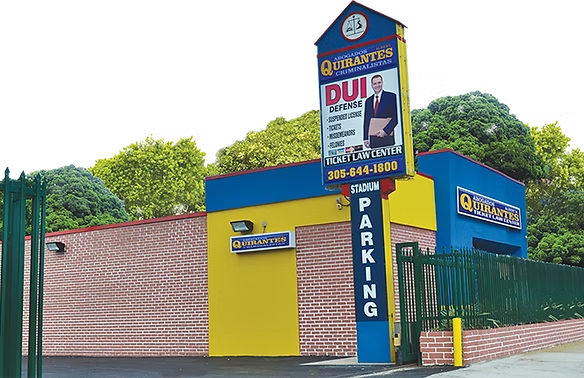
Albert Quirantes, Esq. Criminal DUI & Ticket Lawyers is located at 1815 NW 7th Street, Miami, FL 33125. We serve clients in English and Spanish. Meet the full team on our attorneys page.
Yes. A technical violation can lead to a warrant or an arrest even when no new crime is alleged. The procedure depends on the allegation, the type of supervision, and eligibility for alternative sanctions.
No. Florida law allows release in many cases, but bond is not automatic, and some statutory categories require detention. A prompt review of the warrant, the original offense, the allegation, your history, and a release plan is essential.
No. An arrest is an accusation. The judge must evaluate evidence. Because the standard is lower than beyond a reasonable doubt, the violation hearing must be prepared even if the new criminal case is still pending.
No. A judge decides a probation violation. You have the right to be heard and to be represented by a lawyer, and the defense may challenge the witnesses and evidence.
Yes, but hearsay cannot be the only basis for revocation. The State needs non-hearsay evidence connecting you to the violation.
Inability to pay matters, but it must be proved with records of your resources and good-faith efforts. When that showing is made, the court must consider alternatives to imprisonment.
Yes. Depending on the facts and the law, the court may continue or modify probation, add conditions, impose community control, or revoke supervision. A first low-risk technical violation can trigger a statutory limit on revocation.
Potentially. If probation is revoked, the court may impose any sentence it could have imposed originally. Your exposure requires review of the original charge, judgment, scoresheet, plea, and sentencing laws.
Yes, once the affidavit is filed and a warrant, arrest, or notice to appear follows. The probation period is tolled until the court rules, and the court keeps jurisdiction while the violation is pending.
Be respectful and do not obstruct supervision, but speak with a lawyer before giving a detailed statement. What you say can be used at the violation hearing and in any new criminal case.
It depends on how the original case ends. A revocation can turn a withheld adjudication into a conviction, which can make the record ineligible. See our Expungements page for more.
A probation violation puts the original sentence back on the table. Bring your probation order, violation affidavit, warrant, payment history, officer communications, treatment and testing records, approvals, receipts, medical documents, and all paperwork from any new arrest to a free strategy session.
Contact Albert Quirantes, Esq. Criminal DUI & Ticket Lawyers today. Text or Call: 305-644-1800. Because every case is different, legal fees are quoted by the attorney only after a thorough analysis of the facts, evidence, charges, and expected work.