







ARRESTED? INVESTIGATED?
ARRESTADO? INVESTIGADO?
Most mortgage fraud cases do not begin with an arrest. They begin years after the closing, when a loan defaults, a lender audits the file, a title dispute surfaces, or an agent asks for a “quick interview.” Federal prosecutors have up to 10 years to bring bank fraud and false loan statement charges, so a transaction you have long forgotten can come back as an indictment.
Answered around the clock. Free and confidential. English or Spanish.
In a mortgage fraud case, the documents tell the story, and the first version the government hears often becomes the one it believes. Bring every subpoena, warrant, target letter, complaint, indictment, loan application, closing disclosure, settlement statement, deed, mortgage, appraisal, title record, bank statement, email, text, and licensing notice to a free strategy session.
Contact Albert Quirantes, Esq. Criminal DUI & Ticket Lawyers today. Text or Call: 305-644-1800. Because every case is different, legal fees are quoted by the attorney only after a thorough analysis of the facts, evidence, charges, and expected work.

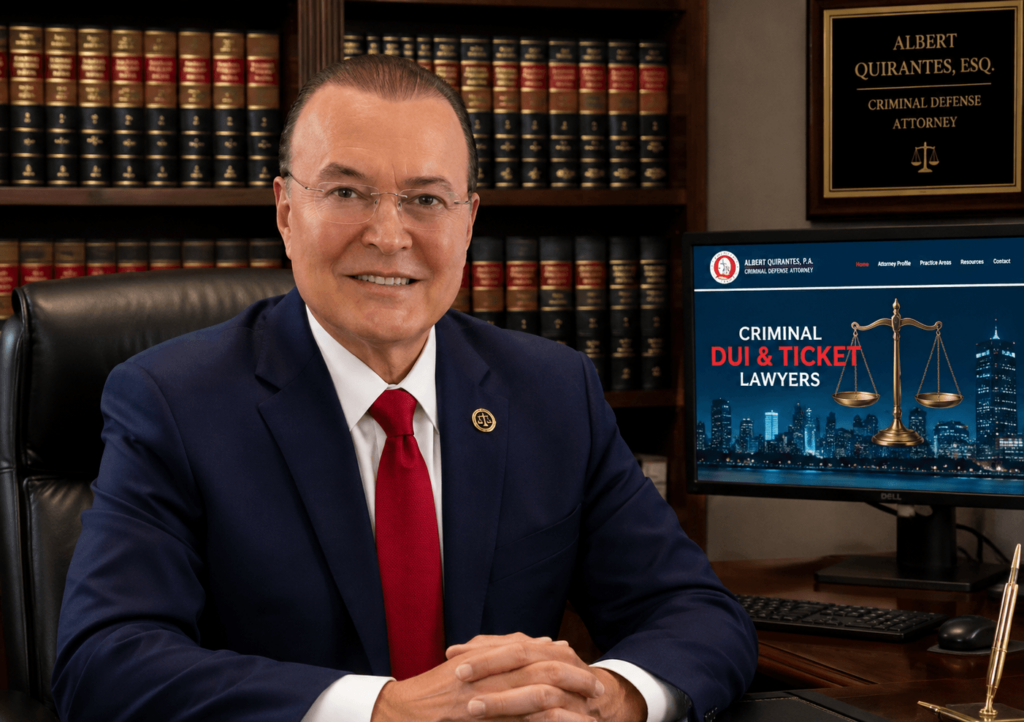
Albert Quirantes has practiced criminal defence for more than 35 years, represented more than 8,000 clients, and handled numerous jury trials. His firm has over 1,400 five-star Google reviews and serves clients in English and Spanish.
Albert Quirantes, Esq. represents Mortgage Fraud law cases throughout Miami-Dade County, Broward County, and South Florida.
Call us now at (305) 644-1800 for a FREE STRATEGY SESSION
Represented since 1987
English and Spanish
If you are looking for a Miami mortgage fraud lawyer, you need one who will trace every document back to the person who actually wrote, changed, or approved it. At Albert Quirantes, Esq. Criminal DUI & Ticket Lawyers, we concentrate our practice in criminal defense. We defend borrowers, buyers, sellers, investors, and real estate professionals accused of mortgage fraud, deed and title fraud, and related fraud and white collar charges in Miami-Dade state court and in federal court in the Southern District of Florida.
Do not alter or destroy loan files, closing records, emails, texts, accounting data, title documents, appraisals, or devices. Do not contact another participant to coordinate an explanation. Get legal advice before speaking with an investigator, lender, insurer, licensing authority, or alleged victim. Free strategy session. Text or Call: 305-644-1800.
Text or Call: 305-644-1800 for a free strategy session with an attorney. Legal fees are quoted by the attorney only after a thorough analysis of the facts, evidence, charges, and expected work, because every case is different.
Florida Statute 817.545 defines the mortgage lending process broadly. It covers solicitation, application or origination, negotiation of terms, third-party services, underwriting, signing and closing, and funding of a residential mortgage loan. Covered documents include mortgages, deeds, surveys, loan applications, appraisals, settlement statements, income and employment verifications, tax returns, bank statements, payroll records, and required disclosures.
The State must prove that the accused acted knowingly and with intent to defraud. The statute covers four kinds of conduct:

Two limits matter. An omission about employment, income, or assets is not material when the loan did not require that information. And a charge cannot rest solely on information lawfully disclosed under federal disclosure laws. Those limits are often decisive when the dispute is really about a stated-income loan, a disclosure format, an underwriting exception, or a misunderstanding.
“Real estate fraud” is not a single Florida crime. The charge may rest on mortgage fraud or on another statute tied to a deed, a lien, a signature, an identity, a rental, or a transfer of money.

The label on an investigative report does not decide the final charge. We analyze the filed information or indictment, each element, the transaction date, venue, the history of each document, and whether separate counts improperly duplicate the same conduct.
A mortgage transaction can create state and federal exposure at the same time. Federal jurisdiction may rest on a federally insured lender, a federally related mortgage loan, an interstate wire or email, or the movement of proceeds.

Under 18 U.S.C. § 3293, the government generally has 10 years to indict under sections 1014 and 1344, and under section 1343 when the offense affects a financial institution, instead of the usual five.
Federal sentences depend on the loss amount, the number of victims, the defendant’s role, sophisticated-means and obstruction allegations, acceptance of responsibility, criminal history, and the advisory sentencing guidelines. Statutory maximums are not predictions.
The government must prove the crime charged, not merely that a deal failed, a statement was inaccurate, a borrower defaulted, or someone else in the transaction committed fraud.
Under Florida Statute 817.545, mortgage fraud is a third-degree felony. It becomes a second-degree felony when the loan value stated on the documents exceeds $100,000, which covers most Miami-Dade home loans. The ordinary maximums in Florida Statute 775.082 and Florida Statute 775.083 are:
The court may also order restitution under Florida Statute 775.089. A case can involve frozen accounts, forfeiture of property or loan proceeds, probation conditions, business restrictions, professional discipline, civil lawsuits, tax issues, and immigration consequences for a noncitizen.

After a probable cause finding for mortgage fraud, the arresting agency must notify the county property appraiser under Florida Statute 193.133, and the appraiser may adjust the assessment of the affected property.
A loan file can contain hundreds of documents and a dozen participants. We make the government identify the precise statement or act, who made or filed it, when, which count it supports, and why it was allegedly false and material.
An error, a misunderstanding, a careless entry, a change in circumstances, or reliance on a loan officer or another professional is not intentional fraud. We rebuild what the client knew at the time and compare it with the instructions, drafts, disclosures, underwriting messages, and closing record.
Not every inaccurate detail could influence a lending decision. We examine the loan program, the underwriting criteria, the automated findings, the approval conditions and exceptions, and whether the information was required, already known to the lender, corrected, or actually capable of affecting the decision.
Borrowers, sellers, brokers, loan officers, processors, appraisers, title agents, attorneys, notaries, and investors all touch a transaction. We trace authorship, access, electronic metadata, signatures, instructions, and who received the money, instead of letting another person’s conduct be attributed to the client.
The amount alleged can raise the degree of a Florida charge and drive federal guideline calculations, restitution, and forfeiture. We test payment histories, collateral value, foreclosure proceeds, recoveries, credits, legitimate expenses, causation, and whether the government is counting intended, actual, or duplicated loss.
These investigations rely on warrants, subpoenas, cloud accounts, phones, computers, and financial records. We examine scope, particularity, privilege, authentication, chain of custody, and Miranda issues, and we move to suppress evidence or statements obtained unlawfully.
Emails from the time, disclosures, amended applications, proof of occupancy, employment records, legitimate gifts, repair invoices, market data, and expert analysis can explain the transaction. Corrective action matters, but it must be presented so it is not mistaken for an admission.
1
The case often starts quietly. Preserve documents and electronic data, identify every deadline, and get counsel before consenting to an interview or producing records that may be privileged, incomplete, or beyond what was requested.
2
The case may involve local police, the Miami-Dade State Attorney, the Office of Statewide Prosecution, a federal agency, the U.S. Attorney’s Office, regulators, a licensing board, a lender, an insurer, or a civil plaintiff. Each has different powers, deadlines, and consequences.
3
Do not delete or alter evidence, coach witnesses, create replacement records, or coordinate stories. That can lead to a separate obstruction of justice charge. We issue preservation instructions and manage lawful communications.
4
In state court, the prosecutor may file, reduce, or decline charges. In federal court, the case may begin with a complaint, an information, or a grand jury indictment. Release conditions can restrict travel, financial activity, contact with witnesses, employment, and access to records and devices.
5
We review loan files, closing packages, title records, emails, recordings, device extractions, bank and tax records, appraisal materials, witness statements, and agency reports. Timelines and transaction maps expose missing links and mistaken assumptions.
6
Motions may challenge searches, statements, privilege violations, duplicative counts, venue, hearsay, authentication, expert methods, or unreliable summaries. An accountant, appraiser, mortgage professional, or digital examiner may be needed.
7
Possible outcomes include no charges, dismissal, a reduced charge, a negotiated resolution, or trial. Every proposal must be evaluated for incarceration, guideline exposure, restitution, forfeiture, licensing, immigration, tax, and civil consequences.
8
At trial, the government must prove every element beyond a reasonable doubt. If there is a conviction or plea, disputes over loss, restitution, role, forfeiture, and guideline adjustments require careful preparation.

Mortgage fraud cases are won or lost in the paperwork: who wrote each entry, who knew what, how the money moved, and which statements actually mattered to the lender. Albert Quirantes is a criminal trial lawyer with more than 35 years of experience who has handled more than 8,000 cases in Florida state and federal courts. We organize the transaction, trace every document, and prepare each case for negotiation, motions, trial, and sentencing. The firm has more than 1,400 five-star Google reviews.
Our attorney team includes:
Albert Quirantes, Esq. Criminal DUI & Ticket Lawyers is located at 1815 NW 7th Street, Miami, FL 33125. We serve clients in English and Spanish. Meet the full team on our attorneys page.
No. The State must prove knowledge, intent to defraud, and materiality. Section 817.545 also says an omission about employment, income, or assets is not material when the loan did not require that information.
Yes, potentially. Repayment can affect loss, restitution, negotiation, and sentencing, but it does not automatically defeat a charge if the offense was complete at closing. Intent, materiality, and reliance still have to be proved.
Authorship and knowledge matter. The government must connect you to the false statement with the required intent. Drafts, metadata, emails, signatures, and testimony can show who supplied, entered, changed, or approved the information.
Federal bank fraud and false loan statement charges generally carry a 10-year limitations period, and wire fraud does too when it affects a financial institution. Florida’s deadlines depend on the charge and can be extended for fraud. A lawyer should review the dates in your case.
Yes. Both systems may have jurisdiction. Whether both act depends on the facts, the agencies, and prosecutorial decisions. Coordinated representation matters because a statement in one forum can be used in the other.
Not before getting legal advice. Even an innocent person can give an inaccurate or incomplete account of a complicated closing, and a false statement to a federal agent is a separate crime. Counsel can determine the investigator’s role and whether any interview is advisable.
Fraud cases can involve seizure warrants, restraining orders, forfeiture, liens, and restitution claims. The government must have lawful authority and evidence connecting the property to the offense, and deadlines to contest a seizure can be short.
Yes. An accusation, plea, or conviction can trigger reporting obligations and discipline for brokers, sales associates, mortgage loan originators, appraisers, title agents, and other license holders. Criminal and licensing strategy should be coordinated before any resolution.
It depends on the charge, the outcome, your prior record, and statutory exclusions. A federal case cannot be sealed or expunged under Florida law. See our Expungements page for more.
Yes. A fraud offense with a loss over $10,000 can be treated as an aggravated felony under immigration law. The effect depends on the statute, the charging document, the loss amount, the plea language, the sentence, and your status, so a noncitizen needs coordinated criminal and immigration advice before any plea.
In a mortgage fraud case, the documents tell the story, and the first version the government hears often becomes the one it believes. Bring every subpoena, warrant, target letter, complaint, indictment, loan application, closing disclosure, settlement statement, deed, mortgage, appraisal, title record, bank statement, email, text, and licensing notice to a free strategy session.
Contact Albert Quirantes, Esq. Criminal DUI & Ticket Lawyers today. Text or Call: 305-644-1800. Because every case is different, legal fees are quoted by the attorney only after a thorough analysis of the facts, evidence, charges, and expected work.