








ARRESTED? INVESTIGATED?
ARRESTADO? INVESTIGADO?
A warrant does not expire on its own, and ignoring it rarely makes it smaller. In Florida, willfully missing court after being released on a felony charge is a separate third-degree felony punishable by up to five years in state prison, on top of the original case. A missed court date on a misdemeanor charge can become a new first-degree misdemeanor. The sooner the warrant is identified and addressed, the more options you are likely to have.
Answered around the clock. Free and confidential. English or Spanish.
Do not wait for the warrant to find you. Bring any notices, case numbers, and court papers you have, and use the office’s secure process for sensitive documents. Contact Albert Quirantes, Esq. Criminal DUI & Ticket Lawyers today. In-person, phone, and video appointments are available. Text or Call: 305-644-1800. Because every case is different, legal fees are quoted by the attorney only after a thorough analysis of the facts, evidence, charges, and expected work.



Albert Quirantes has practiced criminal defense in warrant and capias cases for more than 35 years, represented more than 8,000 clients, and handled numerous jury trials. His firm has over 1,400 five-star Google reviews and serves clients in English and Spanish.
Albert Quirantes, Esq. represents clients facing arrest warrants and capias throughout Miami-Dade County, Broward County, and South Florida.
Call us now at (305) 644-1800 for a FREE STRATEGY SESSION
Represented since 1987
English and Spanish
Learning that you may have a warrant can affect work, travel, and everyday decisions. The useful first step is to identify the court, the reason for the warrant, and its current status. An old case number, an online search result, or a caller’s warning does not provide the full answer.
If you need a Miami arrest warrant lawyer, Albert Quirantes, Esq. Criminal DUI & Ticket Lawyers helps clients address Florida arrest warrants, capiases, bench warrants, probation violation warrants, missed court dates, and related release issues in Miami-Dade County and throughout South Florida. We review the records and develop a lawful plan for the particular case. Text or Call: 305-644-1800 for a free strategy session with the attorney.
Text or Call: 305-644-1800 for a free strategy session with an attorney. Legal fees are quoted by the attorney only after a thorough analysis of the facts, evidence, charges, and expected work, because every case is different.
An arrest warrant authorizes taking a person into custody. A capias or bench warrant may arise from an existing court case, including a failure to appear. A probation-violation warrant concerns alleged noncompliance with supervision. A search warrant authorizes a particular search or seizure and is not the same document as an arrest warrant.
Section 901.02 governs issuance of Florida arrest warrants. Search warrants involve separate requirements under Chapter 933. Federal warrants follow federal law and the Federal Rules of Criminal Procedure.
A civil writ of bodily attachment, an immigration administrative document, and a criminal capias can lead to different procedures. Counsel should inspect the actual document instead of treating everything described as a warrant as interchangeable.

We start with identifying information, the county or agency, any case number, prior notices, and the circumstances that brought the issue to your attention. A name match alone can be wrong. Birth dates, aliases, and other identifiers may be needed to distinguish people with similar names.
The FDLE Wanted Persons search is one possible lead. FDLE warns that the information may not be complete or current and is not confirmation that a warrant is active. A blank result likewise should not be treated as proof that no warrant exists. Some matters are not publicly visible.
Counsel can review the docket and seek confirmation through the appropriate court or reporting agency. That review should identify whether there is a bond provision, a no-bond designation, another hold, a related case,

or a court order that has not yet been reflected in the records. Until the status is reliably resolved, do not assume the risk of arrest has ended.

A missed hearing may involve an incorrect address, a notice problem, hospitalization, detention elsewhere, or a misunderstanding about whether personal appearance was required. Save documents that establish what happened, including notices, envelopes, messages, medical records, and custody records. Do not create a false explanation or alter a document.
Willful failure to appear after release under Chapter 903 can create a separate offense under section 843.15, in addition to bond consequences. If the original charge was a felony, the failure to appear is a third-degree felony, punishable by up to five years in state prison.
If the original charge was a misdemeanor, it is a first-degree misdemeanor, punishable by up to 364 days in county jail. Any bond posted can also be forfeited. Not every scheduling mistake proves the required willfulness, but ignoring a missed date can make the problem harder to address.
Depending on the case, counsel may request that the court recall or quash the capias, reset the hearing, and consider release conditions. A motion is a request, not an order. Filing it does not automatically suspend enforcement or excuse another appearance.
Sometimes the appropriate plan involves a coordinated voluntary surrender. In other cases, counsel may seek a hearing first. The available procedure depends on the issuing court, the allegation, current orders, and the person’s circumstances. Neither approach guarantees that custody can be avoided.
Preparation may include accurate identification, emergency contacts, prescription information, employment verification, residence documents, and arrangements for children or other dependents. Discuss these needs with counsel before acting. Do not bring prohibited items to a courthouse or detention facility.
Section 903.046 addresses bail criteria, and section 907.041 addresses detention and release. A bond amount in one case does not resolve every other hold. A first appearance is not a promise of release, and eligibility for release must be evaluated separately from the merits of the charge.
A violation warrant may be based on a new allegation or alleged failure to comply with supervision. The process under section 948.06 differs from prosecution of a new offense. Release and sentencing exposure need their own analysis. See our Probation Violation page.
Provide the original sentence, supervision conditions, payment and reporting records, treatment attendance, and any communications with the officer. Inability to comply, disputed instructions, and the nature of the alleged violation can matter. Do not assume a probation officer can withdraw a judge’s warrant or that dismissal of a new case automatically resolves the violation proceeding.
A warrant from another Florida county may require coordination with the issuing court. A local appearance does not necessarily resolve the underlying case. Counsel should identify which judge can grant the requested relief and what transfer or transport process applies.
Interstate extradition involves Chapter 941 and additional rules. Identity, the demanding state, available procedures, and any waiver require review. An extradition hearing ordinarily does not decide the merits of the charge pending in the other state. Do not sign a waiver without understanding its effect and discussing the available choices with counsel.
Moving, waiting, or paying an unrelated ticket does not automatically cancel a warrant. Any limitations issue requires analysis of the offense, commencement of prosecution, service efforts, and applicable law. Do not assume that an old warrant has expired.
If officers execute a search warrant, do not physically interfere. Ask for a copy when it can safely be provided, note the agency, and preserve the inventory or receipt. You can state that you do not consent to a search beyond lawful authority while complying with lawful commands. Do not destroy, hide, or remotely erase evidence.
Counsel can examine probable cause, the place and items described, scope, timing, execution, and the treatment of electronic information. Whether evidence can be suppressed depends on the governing law, your rights in the place or property, and applicable exceptions. A defect does not automatically eliminate the entire prosecution.
If officers request access codes or an interview, ask for counsel rather than guessing about your obligations. Different facts and legal orders can produce different answers.

A federal arrest warrant may involve a federal complaint or indictment and proceedings before a federal judicial officer. State-court relief does not automatically cancel it. Federal release, removal between districts, and search procedures require separate review.
An immigration detainer or administrative warrant is also distinct from a Florida criminal warrant. Resolving a state case may not end immigration custody. Tell counsel about citizenship, immigration history, and any agency notices so criminal and immigration issues can be coordinated. Our Deportable Offenses and Immigration Law pages explain the immigration side.
An order involving a child may use juvenile procedures rather than adult booking and bond rules. Provide the child’s age, case number, placement or supervision information, and all notices. A parent should not assume that an adult-court instruction applies to the child. See our Juvenile Crimes page.
If the case has moved to adult court, identify that change immediately. A young person’s eligibility for youthful-offender sentencing is a separate issue and does not itself cancel an arrest order.

Do not rely on caller ID, a threatening message, or a payment link as proof of a warrant. A demand for gift cards, cryptocurrency, or payment to an unfamiliar personal account is a reason to stop and verify through independently obtained official contact information.
Preserve the message for counsel. Do not disclose passwords, Social Security numbers, or payment details to an unverified caller. Verification should come from reliable records and the appropriate authority, not the person demanding money.

A warrant problem is often solved or made worse in the first few days. We explain what the records establish, what remains unresolved, and which court action may be appropriate. Albert Quirantes is a trial lawyer and former assistant public defender with more than 35 years of experience who has handled more than 8,000 cases, and the firm has more than 1,400 five-star Google reviews.
Our attorney team includes:
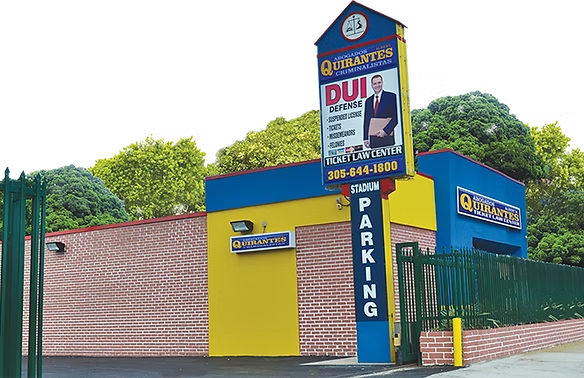
Albert Quirantes, Esq. Criminal DUI & Ticket Lawyers is located at 1815 NW 7th Street, Miami, FL 33125. We serve clients in English and Spanish. Meet the full team on our attorneys page. Related pages: Probation Violation, Juvenile Crimes, Youthful Offender, Deportable Offenses, and Expungements.
The purpose of early representation is to make informed, lawful decisions. We do not promise that a warrant can be removed without an appearance or that a particular judge will release a client.
No. A warrant is not a conviction. Its issuance and the underlying accusation must be distinguished from the prosecution’s burden to prove a criminal charge.
No single public search provides that assurance. Records can be incomplete, delayed, or restricted. Counsel should review the appropriate court and agency information.
Not automatically. Representation does not suspend a warrant. Counsel can seek appropriate relief and plan next steps, but the warrant remains subject to enforcement unless legally resolved.
Sometimes a court will consider relief through a motion or hearing, but the procedure and outcome depend on the case. No lawyer can guarantee that personal appearance or custody will be avoided.
Preserve reliable records and contact counsel promptly. The reason for the absence may support a request for relief, but it does not automatically cancel the warrant.
No. Filing a motion asks for relief. It does not itself recall the warrant, stay enforcement, or excuse future appearances.
Do not assume a universal expiration period. An old matter may remain active, and any limitations or service issue requires analysis of the particular case and law.
Not necessarily. Another case, a no-bond order, an out-of-state matter, or an immigration hold may require separate action. Review all custody issues before relying on one bond amount.
Do not assume so. The officer’s position may matter, but relief from a judicial warrant generally requires the appropriate court action. Counsel should review the actual order and violation allegations.
Understand the requesting state, identity issue, available procedure, and consequences before deciding with counsel. A waiver can affect how transfer proceeds and should not be treated as routine paperwork.
Bring notices, case numbers, identification, prior court orders, release or supervision terms, and documents explaining any missed appearance. Use the office’s secure process for sensitive material.
It can be. Under section 843.15, willfully failing to appear after release on a felony charge is a third-degree felony, and after release on a misdemeanor charge it is a first-degree misdemeanor. The reason for the absence matters, so preserve records that explain it.
Yes. The strategy session with the attorney is free. Every case is different, so legal fees are quoted by the attorney only after a thorough analysis of the case.
Do not wait for the warrant to find you. Bring any notices, case numbers, and court papers you have, and use the office’s secure process for sensitive documents. Contact Albert Quirantes, Esq. Criminal DUI & Ticket Lawyers today. In-person, phone, and video appointments are available. Text or Call: 305-644-1800. Because every case is different, legal fees are quoted by the attorney only after a thorough analysis of the facts, evidence, charges, and expected work.