





Florida’s transportation law changes take effect October 1, 2026. One change is already prompting questions from drivers: the amount of apparent property damage that triggers an immediate duty to notify law enforcement after a crash rises from $500 to $2,000.
The change is part of Senate Bill 488, Chapter 2026-39. The new threshold appears in Florida Statutes section 316.065. It sounds simple, but it leaves a real-world question unanswered: how can a driver estimate repair costs at the scene?
What the new rule says
Beginning October 1, a driver must immediately notify the proper law-enforcement agency when a crash causes an injury or death, or when apparent damage to a vehicle or other property is at least $2,000. The injury-or-death reporting requirement remains in place regardless of the amount of property damage.
The statute refers to the apparent amount of damage. It does not provide drivers with a pricing chart, inspection procedure, or other method for deciding whether damage is above or below $2,000. That may be difficult even for a careful driver. A dented bumper can conceal damage to sensors, cameras, wiring, or other systems. A vehicle that appears safe to drive may still need substantial repairs.
The number is not permission to leave
Raising the reporting threshold does not erase a driver’s other duties after a crash. Drivers involved in a crash causing damage to an attended vehicle or property must stop, remain at the scene, and provide required information. They also have a duty to provide reasonable assistance to an injured person. Different steps apply when the damaged vehicle or property is unattended.
There is also a separate written-report requirement. Florida law says that a driver involved in a property-damage crash that does not require a law-enforcement report must submit a written report to the Department of Highway Safety and Motor Vehicles within 10 days. Drivers should check the department’s current instructions and forms.
In other words, the new $2,000 figure concerns when immediate notice to law enforcement is required based on apparent property damage. It is not a general “no-report” rule, and it does not authorize a driver to leave without exchanging information or addressing an injury.
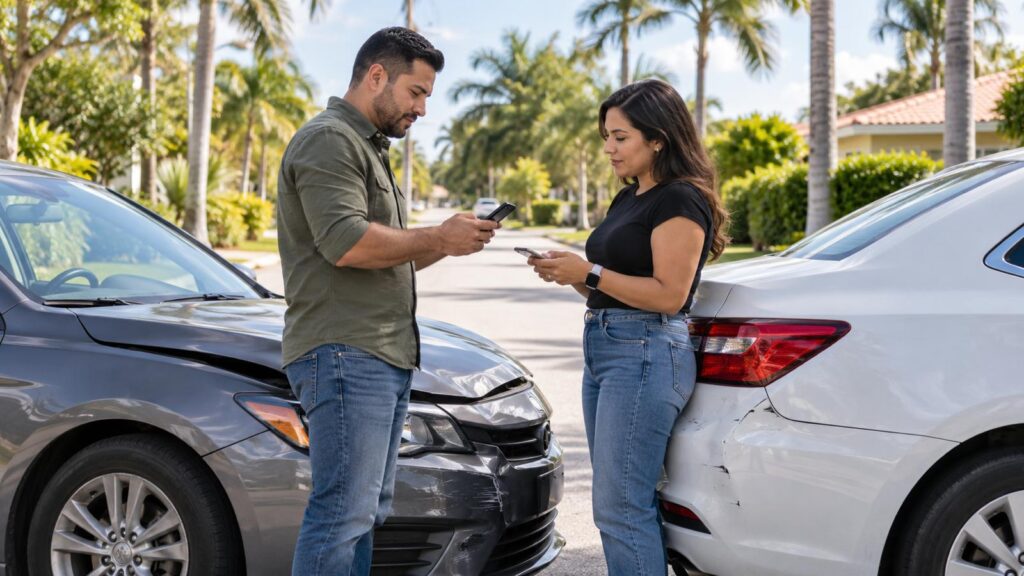
What should drivers do at the scene?
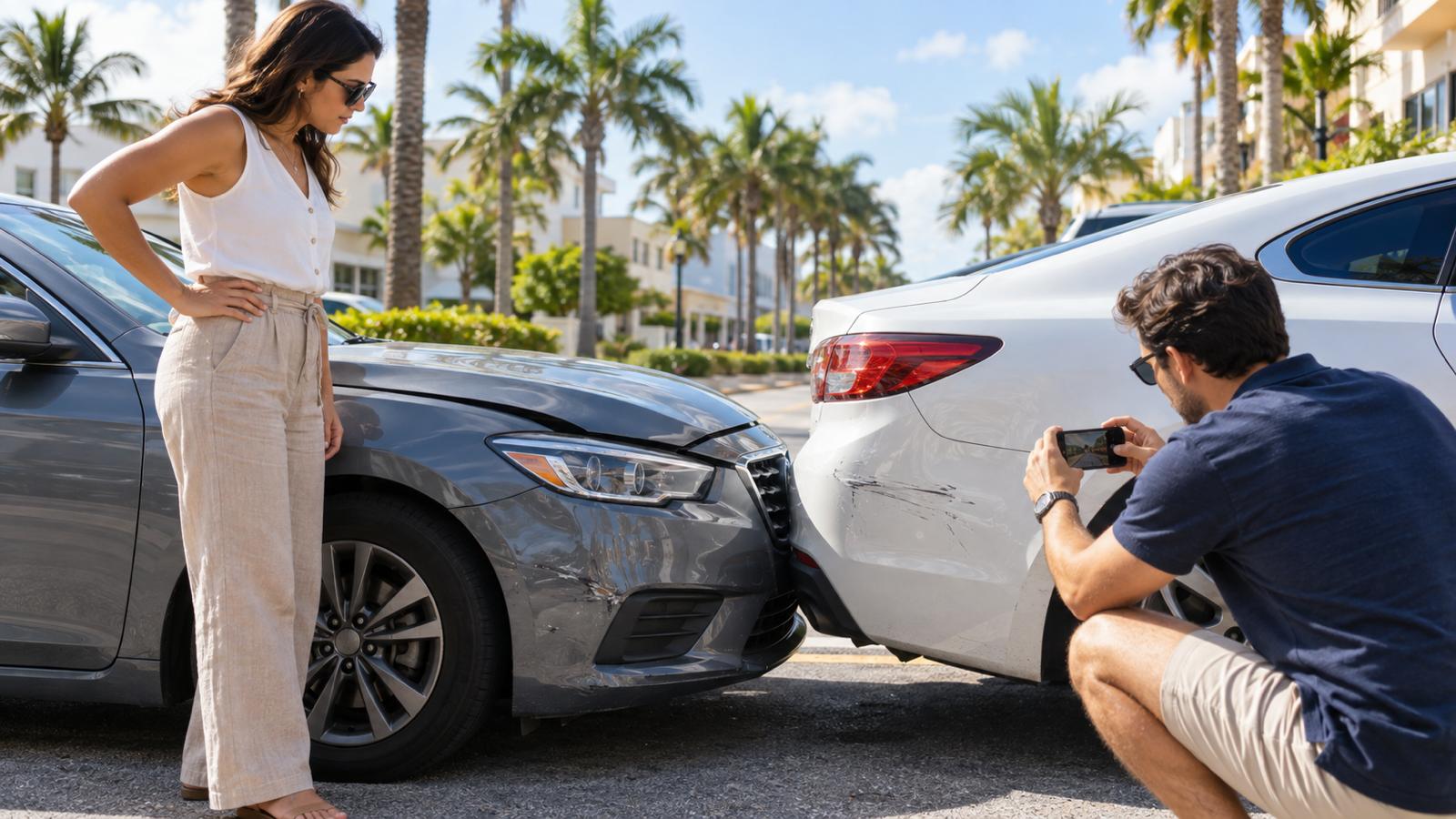
When possible, move out of traffic safely, check whether anyone is hurt, and call emergency services if anyone may need help. Exchange names, contact details, vehicle and insurance information with the other driver. Photograph the vehicles, license plates, the scene, and any visible damage. Get contact information from witnesses, and write down what happened while it is fresh.
If there is an injury, uncertainty about whether someone is hurt, a disagreement about damage, or concern that the damage may be more than it appears, contacting law enforcement is a prudent choice. A call does not decide who was at fault. It can help document what happened. Drivers should also notify their own insurance company promptly and keep repair estimates and medical records.
Other driver-facing changes in SB 488
The crash rule is only one part of SB 488. The law also changes some vehicle-registration requirements. Individual applicants must provide proof of address satisfactory to the department and one of these documents: a valid REAL ID driver license or identification card from Florida or another state; a valid, unexpired U.S. passport; or a valid, unexpired foreign passport together with an unexpired Form I-94.
The law generally calls for a permanent Florida residence or business address. If an owner has no permanent residence or business, or it cannot be identified by a street address, the law no longer lets an individual applicant provide the permanent Florida address of a close relative or friend instead; that accommodation was removed effective October 1, 2026, and the only exception that remains is for active-duty members of the U.S. Armed Forces. Applicants should confirm current document requirements with the department or their tax collector before going to an office.
SB 488 also expressly allows a license-plate frame or decorative border if it does not obscure the plate number or the registration sticker in the upper-right corner. Obscuring devices and materials that interfere with plate visibility remain prohibited. The law changes certain disability-plate procedures and allows the department to use email for some notices, including certain driver-license notices when the driver has authorized email notification.
A practical takeaway
The most difficult feature of the new crash rule may be that it asks drivers to apply a dollar threshold without giving them a reliable way to estimate the damage. A visible scrape may cost little to fix, or it may conceal expensive damage. A driver should not treat a quick visual guess as a complete assessment.
The safest practical approach is to stop, help anyone who may be injured, exchange information, document the scene, and report the crash when there is an injury or a reasonable concern about the damage. The law raises the threshold for mandatory immediate notice based on apparent property damage; it does not remove the need for sound judgment after a collision.
Official sources
- SB 488, Chapter 2026-39, Florida Senate
- Florida Statutes § 316.065, crashes and immediate notice
- Florida Statutes § 316.061, stop and remain at scene
- Florida Statutes § 316.062, exchange of information and aid
- Florida Statutes § 316.066, written crash reports
- Florida Statutes § 320.02, registration application requirements
- Florida Statutes § 320.262, license plate frames and obscuring devices
- Florida Statutes § 320.0843, disability parking permit plates
- Florida Statutes § 322.251, driver-license notices
Speak With a Miami-Dade or Broward Criminal Defense Attorney
If you receive a letter from law enforcement stating that your vehicle was involved in a crash and the driver left the scene, contact Albert Quirantes, Esq. at (305) 644-1800 for a free consultation. These cases can involve serious consequences, including possible arrest or driver’s license suspension. Prompt legal guidance can help you understand your options and protect your rights.
Our firm represents clients throughout Miami-Dade and Broward counties and handles cases involving Florida’s changing criminal laws.