



Florida Veterans Can Now Seek Treatment Court Without Prosecutor Approval
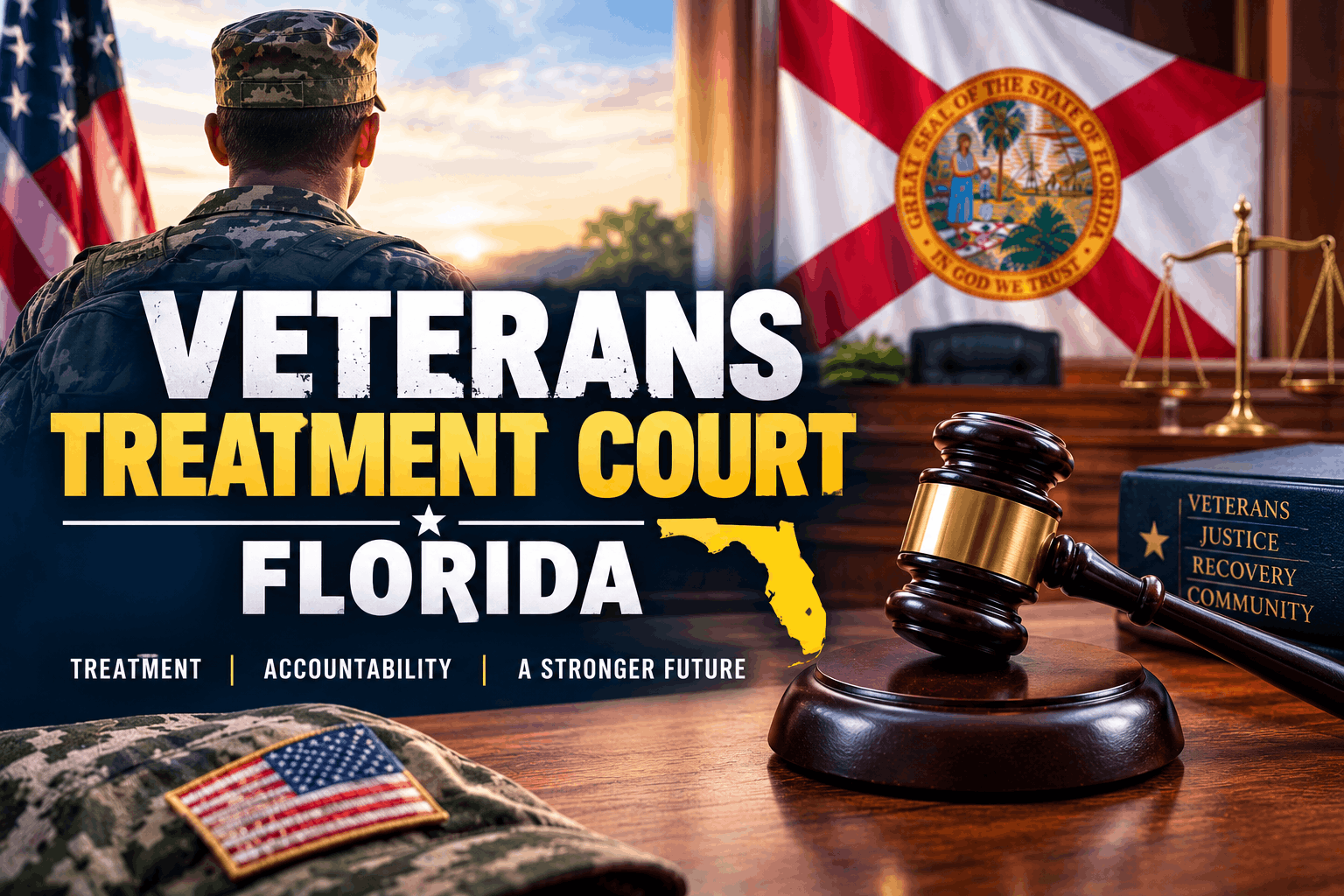
A new Florida law changed who gets the final say when a veteran asks to enter Veterans Treatment Court.
Since July 1, 2026, a prosecutor can still weigh in on the request, but the prosecutor no longer has the power to approve or reject eligibility on their own. The judge now makes that decision after consulting with a multidisciplinary team.
For veterans facing criminal charges, that is a meaningful change.
What Changed on July 1, 2026?
Before July 1, a veteran who wanted to enter Veterans Treatment Court had to start with the State Attorney’s Office. Under the previous version of Florida Statute 394.47891, the defendant submitted an application, and the state attorney reviewed the case to determine whether the veteran met the program’s eligibility requirements.
That made the prosecutor the gatekeeper.
If the state attorney rejected the application, the veteran generally could not move forward with Veterans Treatment Court.
That process changed when Chapter Law 2026-128, based on House Bill 199, took effect on July 1, 2026.
Now, the court decides eligibility after consulting with a multidisciplinary team. The state attorney’s approval is no longer required.
The prosecutor still has a voice. Just not the final word.
The law requires the judge to consider any recommendation made by the state attorney before deciding whether the veteran qualifies. The important difference is who makes the final decision: the judge, not the prosecutor.
Why Did Florida Change the Process?
The change was aimed at making Veterans Treatment Court more consistent with other specialty courts in Florida.
According to the bill’s sponsor, Florida’s mental health courts already use a process where the court makes the eligibility decision rather than giving the prosecutor the final say. The goal was to bring Veterans Treatment Court more in line with that approach.
During the House floor debate, the sponsor also clarified that the state attorney did not disappear from the process. As Florida Bar News reported, prosecutors remain part of the multidisciplinary team reviewing cases.
So this is not a situation where the prosecutor is simply removed.
The role changed.
The bill passed the House 110-0 and the Senate 37-0, and the Governor signed it on June 11, 2026.
What Is Veterans Treatment Court?
Veterans Treatment Court is a specialized court program for veterans and active-duty service members whose criminal cases may be connected to issues related to their military service.
That can include PTSD, traumatic brain injury, substance use, and other challenges associated with military service.
The idea is different from simply processing a case through the traditional criminal court system. A qualifying veteran may receive court supervision while also getting access to treatment and support, including VA services, mental health care, substance abuse counseling, and mentorship from other veterans who have gone through similar experiences.
Think of it as treatment and accountability happening at the same time.
But not every criminal case qualifies.
Certain serious violent felonies and sex offenses are generally excluded. Other charges, including DUI, assault, drug possession, and disorderly conduct, may be eligible when the veteran meets the program’s requirements.
Eligibility depends on the specific case.
A New Option After Conviction
There is another important change in House Bill 199 that can easily get overlooked.
The law creates a postadjudicatory Veterans Treatment Court option.
In plain English, that means a qualifying veteran may now be considered for Veterans Treatment Court after a conviction, rather than having the opportunity limited to the pretrial stage.
For offenses committed after July 1, 2026, a sentencing court can place an eligible veteran into Veterans Treatment Court as a condition of probation or community control when the offense is a nonviolent felony and the defendant agrees to participate.
That could matter in a very practical situation.
A veteran may plead guilty or be convicted before anyone seriously considers treatment court. Maybe the possibility was overlooked. Maybe the case moved quickly. Maybe the veteran did not know the program existed.
Under the new law, there can be another opportunity.
Another door.
What This Means for Veterans in South Florida
For veterans in Miami-Dade and Broward, the change may be particularly relevant when a criminal case involves problems connected to military service.
A veteran dealing with PTSD, traumatic brain injury, or substance use may end up facing criminal charges because of conduct that does not tell the full story of what happened.
Under the old process, access to Veterans Treatment Court could depend heavily on whether the prosecutor approved the application.
That is no longer the structure.
The judge now makes the eligibility decision, while the state attorney remains involved as part of the review process.
Facing Criminal Charges? Ask About Veterans Treatment Court
If you are a veteran or active-duty service member facing criminal charges in Miami-Dade or Broward, do not assume that traditional prosecution is your only option.
The July 1 changes may affect cases that are still pending. They may also matter to qualifying veterans who have already been convicted and are approaching sentencing.
The details matter. The offense, timing, eligibility requirements, and stage of the case can all affect whether Veterans Treatment Court is available.
An attorney can review the case and determine whether the new rules create an opportunity to pursue treatment court.
Talk With a Florida Criminal Defense Attorney
If you or a family member is a veteran facing criminal charges, you can contact Albert Quirantes, Esq. at (305) 644-1800 for a free consultation.
The firm evaluates Veterans Treatment Court eligibility under the new rules and represents veterans throughout Miami-Dade and Broward.
Available 24/7.
Sources
- House Bill 199 (2026), Bill History and Chapter Law 2026-128 — final chapter number, vote totals, effective date, amended statutes
- House Criminal Justice Subcommittee Analysis, HB 199 — present situation vs. effect of proposed changes, postadjudicatory VTC provision detail
- Florida Bar News, “Bill to align veterans treatment courts with other specialty courts heads to House floor” — sponsor’s clarification that the state attorney remains part of the multidisciplinary team