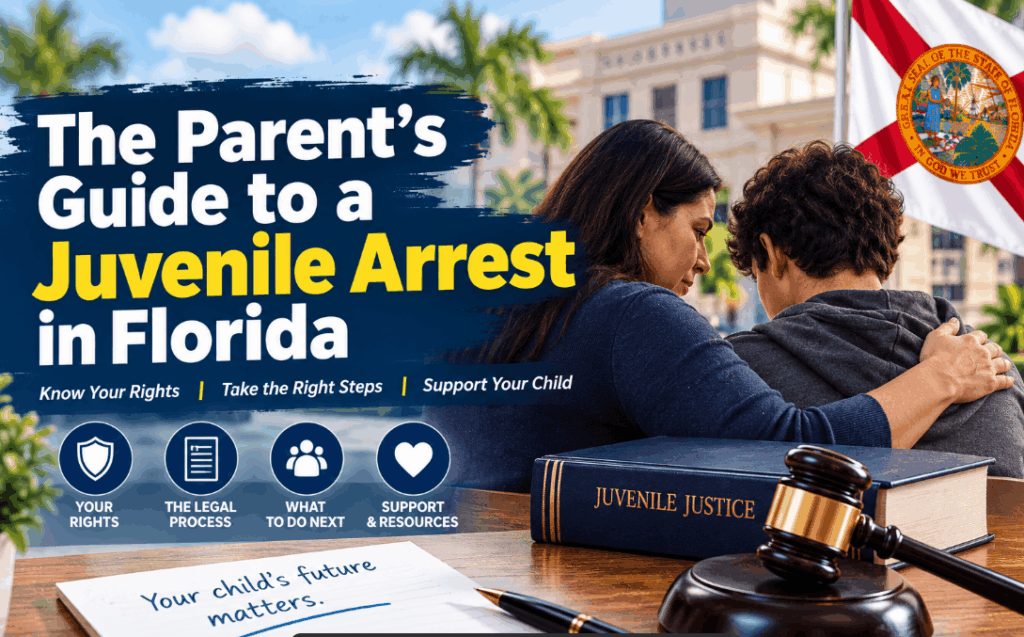








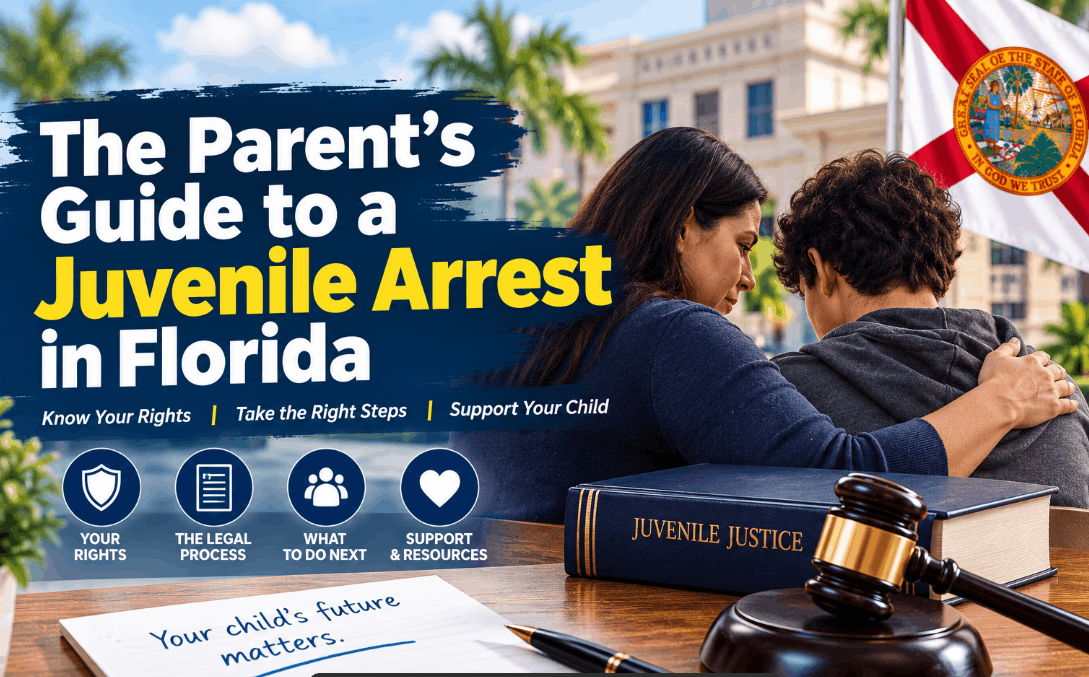
The Parent’s Guide to a Juvenile Arrest in Florida
A free resource from Albert Quirantes, Esq. Criminal DUI & Ticket Lawyers
If your child has been arrested, this guide will help you understand what is happening and what to do next. Keep this page handy, and call us anytime.
1. Take a Breath. Then Take Action.
A juvenile arrest is frightening, but your child needs you calm and focused. The Florida juvenile system is built around rehabilitation, not just punishment, which means there are real opportunities to protect your child’s future, especially if you act early.
2. Know Your Child’s Rights
Your child has the same core constitutional rights as an adult, including:
- The right to remain silent. Your child does not have to answer questions from police.
- The right to an attorney. Your child can and should have a lawyer.
- Protection against illegal searches. Police must follow the law when stopping, searching, and questioning.
Teach your child to say, clearly and politely: “I want to remain silent. I want a lawyer.” Then call us.
3. Understand the First 48 Hours
In Miami-Dade, a child taken into custody usually has a detention hearing within 24 hours. At that hearing, a judge decides whether your child goes home with you, is placed on home detention, or is held in secure detention. Having an attorney present at this hearing can make a real difference.
What to Bring to the Detention Hearing
Proof of your child’s school enrollment, evidence of positive activities (sports, jobs, volunteering), and your presence as a supportive, stable parent. These details help the court feel comfortable sending your child home.
4. Learn the Path Your Case May Take
- Arrest or investigation
- Detention hearing (usually within 24 hours)
- State Attorney review (the critical pre-filing window)
- Filing decision (charges, diversion, or no action)
- Defense and resolution (diversion, dismissal, negotiation, or trial)
- Sealing or expungement of the record where the law allows
5. Watch for the Adult Court Risk
In Florida, prosecutors can move certain cases to adult court through direct file, and children as young as 14 can face adult charges for serious felonies. If there is any possibility of this, getting a lawyer involved immediately is essential. Keeping your child in juvenile court is one of the most important goals of the defense.
6. Protect the Record
A juvenile record can affect school, college, scholarships, the military, and jobs. Many juvenile records can be sealed or expunged, sometimes automatically and sometimes by petition. We pursue this wherever the law allows.
7. Things to Avoid
- Do not let your child talk to police without a lawyer
- Do not post about the case on social media
- Do not wait until the first court date to get help
- Do not assume juvenile court is “no big deal”
8. Helpful Miami-Dade Contacts
- Miami-Dade Children’s Courthouse: 155 NW 3rd Street, Miami, FL 33128
- Florida Department of Juvenile Justice: djj.state.fl.us
- Our office: 1815 NW 7th Street, Miami, FL 33125, near the Children’s Courthouse
Have Questions About Your Child’s Case?
We focus on defending children and keeping them out of adult court. Reach out for a free, confidential strategy session, in English or Spanish.
This guide is for general educational purposes only and is not legal advice. Every case is different. Reading this does not create an attorney-client relationship.
Sources
- Florida Statute 985.255 — the 24-hour detention hearing requirement
- Florida Statute 985.557 — direct file to adult court, including the age-14 threshold for enumerated felonies
- Florida Statute 943.0515 — automatic and petition-based juvenile record sealing and expungement
- Miami-Dade Clerk of the Courts, Children’s Courthouse location — address confirmation
- Florida Department of Juvenile Justice — official state resource